
BUYER GUIDE / ORDER PLANNING
Squishy Toy MOQ, Sample Cost and Lead Time
Understand squishy toy MOQ, sample cost and lead time with carton examples, packaging variables and RFQ questions for buyers.
MOQ, sample cost and lead time are the three numbers buyers ask for first, but each number is meaningful only when it is tied to a specific squishy toy configuration. A carton of small TPR pieces, a display-box baozi and a slow-rebound PU format can have different order thresholds and production assumptions. Use the published product facts as planning references, then ask for a current quote that names the SKU, package, color mix, destination and approval milestones.
MOQ is a product and package rule
MOQ can be stated in pieces, cartons, colors or a combination of those units. The correct comparison is not simply the smallest number printed in a catalog. Ask what the piece quantity represents, how many units are in each carton, whether the MOQ is per color, and whether standard packaging or private-label packaging is assumed. For example, a current sqz349244 reference shows 2 cartons / 1080 pieces and 540 pieces per carton, while sqz349246 shows a 1-carton / 72-piece reference. The different quantities may suit different retail tests. If you want a mixed assortment, request a written answer on mixed-SKU handling instead of adding the piece numbers together and assuming one production minimum.Use a carton model for the first-order budget
Build the first estimate from the carton up. Record pieces per carton, carton count, carton dimensions, gross weight and package format for every candidate. Then map that quantity to your store count, display count or online inventory target. A 720-piece product may support a distributor launch but be too large for a single independent shop. A 72-piece item may be easier to test but have a different freight cost per piece. Add sample freight, packaging setup, inspection and destination charges as separate lines. The supplier's EXW reference is useful for comparing products, but it is not a landed cost. Keep the calculation by SKU so an attractive unit price does not hide an inefficient carton.Sample cost has several parts
A sample request can include the product itself, a custom color or filling, logo application, a retail package, courier freight and sometimes a development or mold review. Ask which parts are included in the sample price and which are quoted separately. If the project is a stock item, request a stock sample first. If the project is private label, ask whether the first sample shows the logo and package or only the base product. If the project is OEM/ODM, ask how many revision rounds are included and what happens if the design changes after approval. Sample cost, freight and dispatch timing are confirmed by SKU and destination; write those assumptions into the RFQ rather than relying on a general sample policy.Sample approval should answer five questions
Use the sample to verify feel, appearance, package and documentation together. First, is the material and filling the one quoted? Second, does the compression and recovery match the intended customer experience? Third, are the size, seams, surface, smell and print acceptable? Fourth, does the individual package protect the item and present it correctly? Fifth, can the supplier connect the exact sample to the requested market documents? Record the result with photos, measurements and the SKU. If several colors or fillings are offered, approve the version that will be counted in the bulk order. A sample that is accepted only because it arrived quickly can create a mismatch later.Lead time starts after the critical approvals
A lead-time statement should identify its starting event. For a standard stock item, the clock may start after order confirmation and packaging selection. For a private-label order, it may start after logo artwork and package proof approval. For a new mold, it may start after design feasibility and tooling confirmation. Ask for separate dates for sample dispatch, artwork proof, package approval, production completion, inspection and cargo handoff. Quantity, mixed colors, special filling, printing and packaging assembly can change the schedule. If a launch date is fixed, work backward from the cargo handoff and leave time for a sample correction instead of treating the production estimate as the entire project timeline.Packaging is a hidden lead-time variable
A standard display box or bag may already be available, while a printed box requires artwork, dieline, proofing, material production and assembly. A package also changes carton volume and the number of units that fit in a master carton. Ask whether the product is packed individually, whether the display package ships formed or flat, and whether the carton marks and barcode labels are applied at the factory. When the first order is small, compare standard packaging with a simple brand label. When shelf presentation is the main selling point, budget the extra approval time instead of cutting it from the schedule. Final lead time should be quoted for the exact package that appears in the purchase order.Freight planning needs more than a destination
Tell the supplier the destination country, city or port, preferred shipping method and desired incoterm. Ask for carton dimensions, gross weight, carton count and the freight basis used in the estimate. Air courier may be appropriate for samples, but a bulk order can require a different forwarder route. Fragile display packaging, liquid or gel-filled formats and battery or light-up products may need special handling questions. The published unit price is a product comparison reference; freight, duties, local delivery and final market charges are confirmed separately. Keeping transport assumptions beside the MOQ calculation prevents a low EXW price from becoming an inaccurate landed-cost forecast.Put the three numbers into one RFQ
A useful RFQ requests MOQ, sample cost and lead time in the same table. List each SKU and desired quantity, then ask for piece MOQ, carton MOQ, carton pack, sample price, sample freight, sample dispatch date, production lead time and cargo-handoff estimate. Add packaging, colors, logo scope, destination market, certificate needs and target launch date. Ask the supplier to flag which values are estimates and which are conditional on approval. The sales desk can then return a response that is easier to compare with another supplier. Use the quote workspace when several SKUs are in one launch so the product list remains complete.9. Separate estimates from commitments
The first quote often contains a mixture of confirmed facts and planning estimates. Label each line so the buyer knows what can be used in a budget and what still depends on approval. A product SKU, current carton pack and standard package may be relatively clear, while custom color, sample freight, printed packaging, inspection timing and cargo handoff can remain conditional. Ask the supplier to state the validity period of the unit price, the event that changes the MOQ, and the event that starts the lead-time clock. Keep sample cost separate from tooling, packaging setup and courier freight. Keep production time separate from ocean, air or local delivery time. If a change is made after the sample is approved, ask which dates and prices need to be recalculated. This simple separation prevents a buyer from comparing one supplier's all-in estimate with another supplier's product-only number. It also makes internal approval easier because the team can see the cost of a test order, the cost of a branded version and the assumptions behind the launch date. A complete RFQ does not guarantee a fixed answer, but it makes every uncertainty visible and actionable.Published SKU references for the discussion
These pages provide the current item image and available product facts. Use the SKU in the RFQ to confirm current price, MOQ, packaging, samples, certificates and delivery for your market.
| Published product reference | Buyer facts to confirm |
|---|---|
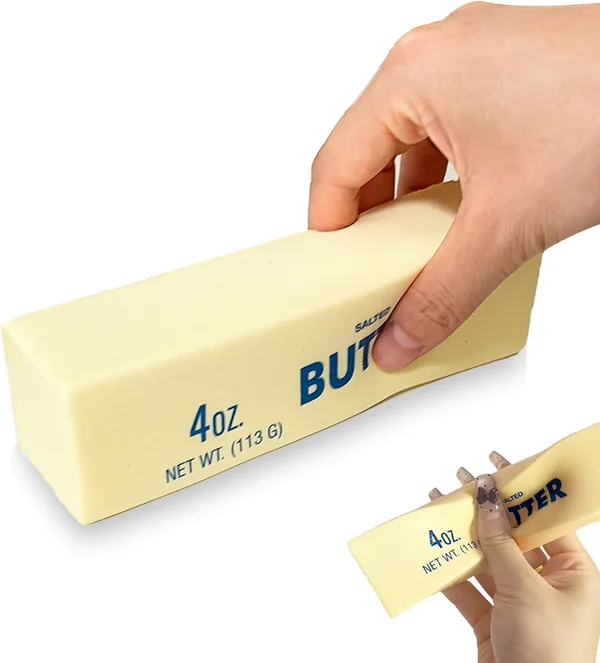
| Small Color-Printed Butter Cheese Sticks SKU sqz349244 | Material: PU Polyurethane (slow-rebound foam) compliant with safety standards Size: 14*4*4 MOQ: 2 cartons / 1080 pcs Packaging: OPP bag Case pack: 540 pcs/carton |
| Gummy candies SKU sqz349246 | Material: Filled with maltose gel, encased in a highly transparent, highly elastic TPR soft rubber shell. The entire toy is translucent with a subtle pearlescent sheen, is odorless, and resists tearing when str Size: 5.5*5.5*9.5 MOQ: 1 cartons / 72 pcs Packaging: Display Box Case pack: 72 pcs/carton |
| Five-Color Steamer Baozi Squishy SKU sqz350815 | Material: TPR Size: Confirm by SKU MOQ: 5 cartons / 720 pcs Packaging: Display Box Case pack: 144 pcs/carton |
Buyer questions
Why do two squishy toys have different MOQs?
MOQ follows the product, carton pack, color mix, filling and packaging process. Compare the complete configuration, not only the product family.
How much does a squishy toy sample cost?
The amount depends on the SKU, customization, package and courier destination. Request a line-item sample and freight quote before dispatch.
When does production lead time begin?
Confirm the starting event. It is normally after the required product, artwork, sample and packaging approvals for the exact order.
Can I mix several low-MOQ products?
Possibly, but mixed-SKU and mixed-color handling is confirmed separately because carton and production rules differ by item.
Continue the sourcing review
Use the slow rising squishy toys wholesale route and the squishy toys wholesale collection for the wider buying route, then compare the two published product references below before requesting current freight and document scope.
- Small Color-Printed Butter Cheese Sticks SKU sqz349244 / MOQ 2 cartons / 1080 pcs.
- Gummy candies SKU sqz349246 / MOQ 1 cartons / 72 pcs.
For logo, color or retail-packaging work, review custom squishy toys OEM and private label squishy toys. Send the selected products through the wholesale RFQ workspace.