
BUYER GUIDE / BRANDED PROGRAMS
Private Label vs OEM ODM Squishy Toys
Compare private label vs OEM ODM squishy toys by mold, logo, color, packaging, MOQ, samples, compliance and lead time for retail programs.
Private label and OEM/ODM squishy toys can look similar in a supplier conversation, but they carry different decisions, costs and approval steps. Private label usually starts with a product format that already exists and changes the customer-facing brand layer. OEM/ODM can also use an existing mold, but it may extend into a new shape, material, filling, function or package system. Choosing the right route early helps a buyer set a realistic MOQ, prepare the right artwork and avoid treating a stock sample as proof of a finished branded product.
Private label starts with a proven product format
A private-label project is a good fit when the product experience is already clear and the main commercial goal is to make the assortment recognizable. A buyer may choose a stock squishy shape, then apply a logo, change colors, add a retail card, use a branded display box or organize several existing SKUs under one visual system. The product structure and material still need to be confirmed by SKU. Private label does not mean that the package, print, color tolerance or compliance scope is automatically included. Define the customer-facing claims and the exact pack before the sample is approved. The fastest route is often one or two stock references followed by a focused brand-layer review.OEM/ODM covers deeper product development
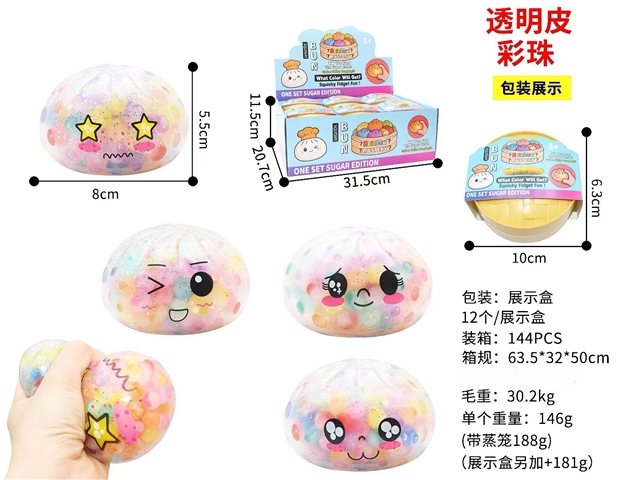
OEM/ODM becomes the better label when the brief changes the product itself or asks the supplier to develop a new solution. A new shape, custom size, new filling, special surface, molded logo, light effect or structural feature can require engineering and tooling review. ODM may begin from a supplier concept that is adapted to a buyer's range, while OEM usually follows the buyer's design or specification. The commercial distinction matters less than the scope written in the brief: state what is fixed, what can change and what must be approved. A reference such as the colorful bead-filled baozi can help communicate the desired visual movement, but it is not a substitute for a custom specification.Use a decision matrix before requesting prices
Choose private label when the shape, feel, size and material are acceptable as they are, the launch needs a branded package, and the expected order can support the applicable print or packaging minimum. Choose an existing-mold OEM adaptation when the product needs a specific color system, logo location, filling or package but the base form is proven. Choose a new OEM/ODM development when the shape, function or tactile behavior is the reason the product should exist. Each step increases the number of variables in the quote. A useful RFQ names the desired route, the target quantity and the deadline so the supplier does not return a stock price for a development project.Logo and color approvals need a physical reference
Artwork on a screen is not the finished product. Send vector logo files, print colors, color references, logo size and placement, surface restrictions and any required barcode or warning copy. Ask how the print method affects the approved sample, especially on curved or soft surfaces. For multiple colors, record the accepted tolerance and whether a mixed-color carton is allowed. If the package is printed, approve the product and package together because a brand color can look different beside the product surface. Keep the approved logo proof, color chip or signed sample with the purchase order. This reduces disputes when a repeat order is produced months after the first launch.Packaging can change MOQ more than the logo
A small logo application may fit within an existing package, but a new display box, header card, printed bag, insert or barcode system can create a separate minimum. Packaging also affects carton quantity, assembly labor, damage protection and freight volume. Ask for package dimensions and a dieline before approving artwork. Confirm whether individual packaging is assembled at the factory, whether a display box is packed flat or formed, and whether retail labels are applied before shipment. When a project has a limited first order, compare the cost and operational risk of standard packaging plus a branded sticker with a fully printed box. The right choice depends on the shelf role and launch volume, not only the lowest unit price.MOQ, samples and lead time follow the chosen scope
A stock product with standard packaging can usually be evaluated with fewer unknowns than a new mold and a custom package. Private label may add a print or packaging minimum even when the base product MOQ is low. OEM/ODM adds feasibility, tooling, sample iterations and final approval milestones. Ask for the MOQ in pieces and cartons, sample cost, whether tooling is separate, and what event starts production lead time. Request a schedule with artwork proof, sample dispatch, sample approval, package approval, production completion and cargo handoff. This lets the buyer compare a fast branded stock launch with a slower but more differentiated development plan.Compliance belongs to the final configuration
The relevant test or certificate must match the product that will actually be sold. A change in material, filling, structure, color, age grade, print, package or warning label can affect the review. Give the destination market and retailer checklist at the beginning, not after production. Ask the supplier to confirm which evidence applies to the exact private-label or OEM configuration, and do not assume a stock product report covers a new design. The final purchase file should connect the SKU, approved sample, package proof and compliance evidence. This is especially important when the same visual family contains both PU foam and TPR formats.A practical branded launch sequence
Start by selecting one or two real stock references and ordering samples. Decide what customers need to see on the shelf, then define the family rule: logo position, color palette, naming, package format and carton marks. Send the brief with quantity, market and timing. Review feasibility and receive the commercial assumptions. Approve product and artwork samples, then approve the retail package. Only after those approvals should the production and freight schedule be treated as firm. For a first launch, keep the number of variants small enough to inspect. A successful private-label test can become evidence for a larger OEM program, while an untested assortment often multiplies problems across every SKU.9. Protect the boundary between brand work and product work
A common source of confusion is a brief that calls itself private label but quietly asks for a new product. Write two lists before the quote: the brand-layer changes and the product-layer changes. Brand-layer items can include logo placement, package artwork, color naming, barcode labels, display copy and carton marks. Product-layer items can include shape, dimensions, material, filling, surface, structure, function and tactile target. If the second list is empty, private label may be the cleanest route. If it contains a new feature, ask for an OEM/ODM feasibility review and a separate schedule. This boundary helps the supplier price tooling and sample work correctly and helps the buyer decide whether a launch date is realistic. It also keeps the product page honest: the final description should state the approved material, size and package rather than carrying over language from a stock reference. For each variant, create a simple approval line that says what is unchanged, what is modified and what still needs confirmation. That record is useful when a branded family contains both a stock format and a newly developed hero product. It also reduces the risk that a package proof is treated as final approval for a product that has not yet passed a physical sample review.Published SKU references for the discussion
These pages provide the current item image and available product facts. Use the SKU in the RFQ to confirm current price, MOQ, packaging, samples, certificates and delivery for your market.
| Published product reference | Buyer facts to confirm |
|---|---|
| 8.5 cm Colorful Bead-Filled Baozi Squishy SKU sqz350809 | Material: TPR Size: 8.5 cm MOQ: 5 cartons / 720 pcs Packaging: Display Box Case pack: 144 pcs/carton |
| White Mini Bun Squishy with Steamer Display Box SKU sqz350799 | Material: PU foam Size: Confirm by SKU MOQ: 3 cartons / 864 pcs Packaging: Display Box Case pack: 288 pcs/carton |
| Gummy candies SKU sqz349246 | Material: Filled with maltose gel, encased in a highly transparent, highly elastic TPR soft rubber shell. The entire toy is translucent with a subtle pearlescent sheen, is odorless, and resists tearing when str Size: 5.5*5.5*9.5 MOQ: 1 cartons / 72 pcs Packaging: Display Box Case pack: 72 pcs/carton |
Buyer questions
Is private label cheaper than OEM/ODM squishy toys?
It can be simpler when an existing product and package are retained, but logo, color, print and packaging minimums still apply. OEM/ODM cost depends on tooling and development scope.
Can I use an existing squishy mold for private label?
Yes. Existing formats can be reviewed for logo, color, finish and package changes. Confirm the exact scope and minimum by SKU.
When should I approve the sample?
Approve the product feel, color, logo application and retail package that will be produced. A generic stock sample is not enough for a branded order.
Does a new package change lead time?
It can. Artwork, proofing, packaging production and assembly must be included before the final lead-time schedule is confirmed.
Continue the sourcing review
Use the private label squishy toys route and the squishy toys wholesale collection for the wider buying route, then compare the two published product references below before requesting current freight and document scope.
- 8.5 cm Colorful Bead-Filled Baozi Squishy SKU sqz350809 / MOQ 5 cartons / 720 pcs.
- White Mini Bun Squishy with Steamer Display Box SKU sqz350799 / MOQ 3 cartons / 864 pcs.
For logo, color or retail-packaging work, review custom squishy toys OEM and private label squishy toys. Send the selected products through the wholesale RFQ workspace.