
How to Vet a Squishy Supplier: Materials & Aging
Ask the right questions about squishy toy materials, aging, and compliance. Verify TPR, silicone, and ABS with our supplier checklist.
What you should ask a squishy supplier about materials and aging comes down to verifiable evidence: which polymer is in each SKU, what the test reports actually cover, and how the factory controls color, labels, and change-overs so a batch doesn't arrive deformed, smelly, or mislabeled. This article gives you a question-by-question framework to evaluate any squishy factory, plus a checklist you can send before you commit to a container.
Key Takeaways
- Material clarity beats vague claims: Ask the supplier to name the polymer for each SKU—TPR, silicone, ABS, or a mixed sensory blend—and to back it with per-SKU documentation. If they can't specify, that's a red flag for aging and compliance.
- Aging is about process, not just chemistry: Deformation and odor often trace to factory controls: how long materials sit, how molds are swapped, and whether line clearance prevents contamination. Ask about change-over procedures and freeze dates, not just the raw material.
- Certifications are product-specific, not factory-wide: EN71, ASTM F963, and CPSIA compliance attach to a specific SKU and test report, not to a blanket factory certificate. Ask for the report that matches your exact product, age grade, and market.
- MOQ is negotiable but varies by SKU: Realistic MOQs for squishy toys range from a few hundred to over a thousand pieces depending on customization. A supplier quoting 300 for a standard item might ask 500 for a custom color. Get it in writing per SKU.
- Lead time needs peak-season detail: A verbal 'quick color change' in September can miss a vessel. Ask for the freeze date, change-over hours, and which job is on the press—otherwise the quoted lead time is fiction.
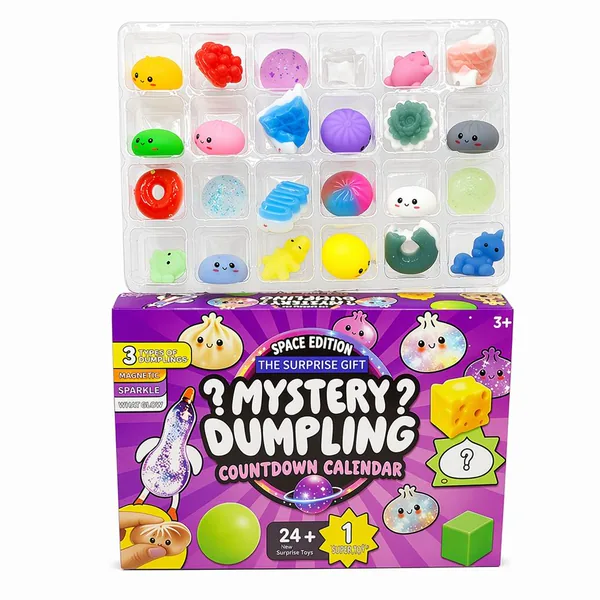
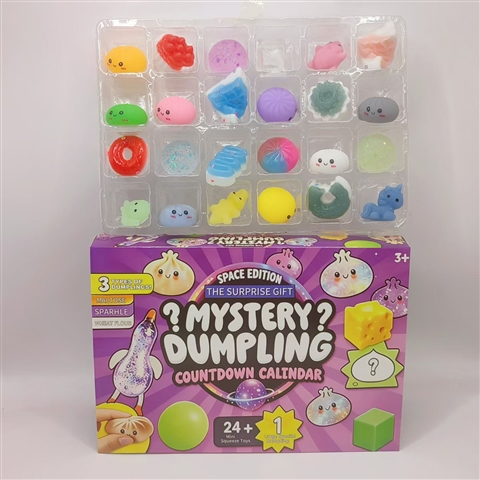
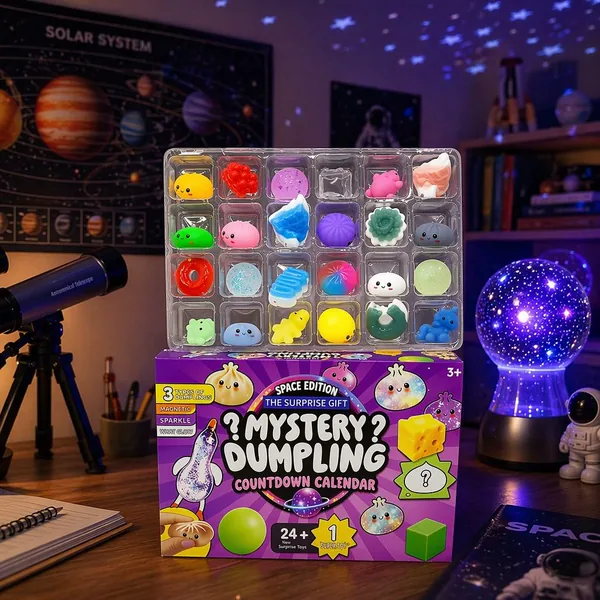
Which Materials Should You Ask About for Squishy Toys?
The three most common squishy materials you'll encounter are TPR (thermoplastic rubber), silicone, and ABS plastic. Each behaves differently under repeated squeezing and over time. TPR is soft and cheap but can deform or exude oil if the formula is poor. Silicone, especially platinum-cure, holds shape longer and resists odor but costs more. ABS is rigid, used more for cases and interactive parts than for the squishy core itself.
Ask the supplier to specify the material for every SKU you're considering, not just for the line as a whole. A catalog that lists 'mixed sensory-toy materials' without a breakdown is asking you to trust rather than verify. For products like a Glitter Squishy Doll Stress Ball, the material is listed as TPR—that's a start, but you need the compound details and any test data behind it.
Your follow-up question should be about additives. Phthalates, heavy metals, and BPA are the usual suspects in cheap soft plastics. The EU Toy Safety Directive (2009/48/EC) restricts specific chemicals and sets lower limits for toys intended for children under 36 months. In the US, CPSIA caps total lead in accessible substrates at 100 ppm. Ask the supplier which regulations they test to, and request the report that names your exact product.
How Can You Verify Aging and Durability Claims?
Aging is the silent killer of squishy toys. A product that feels great at the factory can arrive at your warehouse smelling like a chemical factory or with a permanent thumbprint impression. The supplier should be able to tell you how they test for compression set (whether the material bounces back), odor after storage, and color stability under light or heat.
Ask for evidence, not assurances. A test report from a third-party lab is the gold standard, but even an in-house aging protocol—like storing samples at elevated temperature for a set period—shows that the factory thinks about this. If a supplier can't describe any aging test, treat that as an open question, not a confirmation of failure.
Factory process matters as much as material chemistry. A line that doesn't clear labels, colors, and work instructions between SKUs can contaminate a batch. Ask the supplier to walk you through their change-over procedure and whether they document it. Line clearance is boring until a mixed label reaches a retailer.
What Compliance Documents Should You Request?
Compliance is not a factory-wide badge. It's a per-product, per-market obligation. For the EU, ask for a Declaration of Conformity and test reports showing compliance with the Toy Safety Directive (2009/48/EC) and REACH for chemicals. For the US, request a Children's Product Certificate (CPC) based on testing at a CPSC-accepted laboratory, citing ASTM F963 and other applicable rules.
The CPC must list seven elements, including the product identification, each applicable safety rule, the manufacturer/importer, the date and place of manufacture, and the lab that did the testing. If the supplier can't produce a CPC for your specific SKU, that's a deal-breaker for the US market. Also note that starting July 8, 2026, importers must electronically file certificates with US Customs—so your supplier's data needs to be in a format you can use.
Don't accept a generic 'we comply with EN71' statement. Ask for the report that names your product, the test standard edition, and the lab. The same logic applies to packaging: if the squishy comes in a plastic bag, check that it meets the thickness or perforation requirements to avoid suffocation hazards, and that any tracking label is permanent.
What MOQ and Lead Time Should You Expect?
MOQs for squishy toys vary widely. A standard TPR stress ball might have a MOQ of 300 pieces, while a custom countdown calendar with multiple compartments could require 500. Some suppliers offer lower MOQs for existing designs—as low as 30 for a busy board—but customization pushes the number up. Always ask for the MOQ per SKU, not a blanket figure.
Lead time is where suppliers often slip. A typical production lead time might be 25–35 days, but that assumes no peak-season bottlenecks. Ask the supplier how they handle color changes and mold swaps during your order window. If they can't give you a freeze date and a change-over schedule, your shipment could miss a vessel. Get the lead time in writing, with a clear definition of when the clock starts (after sample approval? after deposit?).
Supplier Evaluation Checklist at a Glance
| Material documentation | Ask: 'What polymer is in each SKU, and can you provide a data sheet?' Verify: per-SKU material type (TPR, silicone, ABS), additive declarations. |
|---|---|
| Aging and durability evidence | Ask: 'How do you test for deformation, odor, and color change over time?' Verify: third-party aging reports or documented in-house protocols. |
| Compliance certificates | Ask: 'Can you share the test report for this exact SKU for the EU and US?' Verify: EN71, REACH, ASTM F963, CPC with seven required elements. |
| MOQ and pricing | Ask: 'What is the MOQ per SKU, and how does customization affect it?' Verify: written quote with MOQ, unit price, and tooling costs if any. |
| Lead time and change-over control | Ask: 'What is your production lead time, and how do you manage color changes during peak season?' Verify: freeze dates, change-over hours, and job scheduling in writing. |
| Packaging and labeling | Ask: 'What packaging options do you offer, and can you handle multilingual labels?' Verify: blister vs. polybag, label language support, line-clearance procedure. |
| QC and inspection | Ask: 'What QC steps happen before shipment, and can you provide photos?' Verify: in-line checks, final inspection, third-party inspection option, and QC photo policy. |
How to Verify a Squishy Supplier Beyond the Brochure
A brochure tells you what the factory wants you to see. Verification means pushing past that. Start with a sample order—not just one piece, but a small batch that mimics your production run. Squeeze it, store it for a week, and check for odor and deformation. That simple test tells you more than any spec sheet.
Then, ask for a video call or factory tour. Look for line clearance in action: are labels and colors segregated between runs? Is there a documented change-over procedure? If you can't visit, request QC photos at each stage—molding, assembly, packaging—and a pre-shipment inspection report from a third party.
Cross-check the supplier's claims against public records. For US compliance, search the CPSC database for recalls involving that factory's products. For the EU, check the Safety Gate alerts. A factory that has had a recall isn't automatically disqualified, but it should be a discussion point. Also, ask for references from other importers in your market—not just the supplier's best customers, but someone who will give you a straight answer about lead times and quality.
Why Chenghai and Shantou Dominate Squishy Production
If you're sourcing squishy toys in China, you'll end up in Chenghai or Shantou, both in Guangdong province. Chenghai is the self-proclaimed toy capital, with thousands of factories clustered within a few kilometers. That density means you can visit multiple suppliers in a day and compare materials, MOQs, and lead times side by side.
The advantage isn't just price—it's ecosystem. Mold makers, material suppliers, and packaging printers are all nearby, so a custom color or a new mold can be turned around faster than in a less concentrated region. Shantou, the larger city, offers similar access with more port infrastructure for exports.
But density also means variation in quality. A factory that makes premium silicone squishies might sit next to one that uses cheap TPR with questionable additives. That's why the questions in this article matter: they force the supplier to show evidence, not just location. Whether you're in Chenghai or sourcing remotely, the same verification steps apply.
FAQ: What Buyers Ask About Squishy Materials and Aging
What is the typical MOQ for custom squishy toys?
MOQs vary by supplier and customization. Standard TPR stress balls might start at 300 pieces, while custom countdown calendars with multiple compartments can require 500 or more. Some suppliers offer lower MOQs for existing designs, so ask per SKU and get the quote in writing.
How can I check if a squishy toy will deform or smell over time?
Ask the supplier for aging test evidence, such as compression set data or accelerated aging reports. Also, order a small sample batch and store it for a week to check for odor and deformation yourself. If the supplier can't describe any aging test, treat that as a red flag.
Which certifications should a squishy toy have for the US market?
For children under 12, the supplier must provide a Children's Product Certificate (CPC) based on third-party testing at a CPSC-accepted lab, citing ASTM F963 and other applicable rules. The CPC must list seven elements including the product, safety rules, and lab. A test report alone isn't enough.
What documents do I need for EU sales of squishy toys?
You need a Declaration of Conformity and test reports showing compliance with the EU Toy Safety Directive (2009/48/EC) and REACH for chemicals. The product must carry CE marking. Also, under the General Product Safety Regulation (EU 2023/988), you need an EU-based economic operator responsible for compliance.
How do I verify a supplier's QC process before ordering?
Ask about line clearance procedures between SKUs, in-line checks, and whether they provide QC photos before shipment. Request a third-party inspection option and ask for references from other importers. A factory that can't describe its change-over process is a risk for cross-contamination and label mix-ups.
What lead time should I expect for a custom squishy order?
Typical production lead times are 25–35 days, but peak season can stretch that. Ask for a freeze date for color and design changes, and get the change-over schedule in writing. A verbal 'quick change' in September can miss a vessel.
Sources
Related Products & Categories
Continue the sourcing review
Turn this guide into a quote-ready shortlist. Start with the squishy toys wholesale category, then compare two published SKUs before asking for current freight and document scope.
- Five-Color Steamer Baozi Squishy (SKU sqz350815)MOQ: 5 cartons / 720 pcs; packaging: Display Box.
- 8.5 cm Colorful Bead-Filled Baozi Squishy (SKU sqz350809)MOQ: 5 cartons / 720 pcs; packaging: Display Box.
For logo, color or retail-packaging work, review the custom squishy toys OEM and ODM program or send the selected items through the wholesale quote workspace.