
Squishy Supplier Cost Review: Beyond the Unit Price
How squishy importers should evaluate suppliers beyond unit price: material evidence, QC, packaging, MOQ, lead time, and total landed cost.
A squishy supplier cost review should compare total landed cost, not the quoted unit price. The cheapest quote often masks costs that surface later: inconsistent mold output, heavy manual inspection, packaging that fails EU PPWR review, peak-season changeover delays, and mixed-label incidents. For a sensory-toy importer, distributor, or retailer, the defensible decision is to score suppliers on material evidence, process consistency, packaging compliance, QC traceability, MOQ fit, lead time realism, and support — then compare the landed cost of the whole package.
The framework below uses one documented factory case and one supporting first-order record, and it marks every evidence boundary so you can separate verified facts from assumptions and open questions.
Key Takeaways: What Changes When You Review Beyond Unit Price
- Unit price is one input in a total landed cost model that also includes freight, duties, incoming inspection, sorting, rework, safety stock, and supplier management time.
- Squishy toys depend on repeatable molding, filling, sealing, and material consistency; a supplier that hits quality through heavy manual inspection may become fragile as volume rises.
- Packaging language and format are part of the product, not a translation afterthought — short localized instructions and simple packaging supported a school and prize distributor in Bogotá entering three private school sensory-corner programs, a silent contract renewed each semester.
- Peak-season lead time must be tied to written freeze dates, change-over hours, and press job assignments; a verbal quick colour change in September has missed vessels.
- A controlled benchmark of one repeat line — factory route, landed cost, MOQ, freight structure, QC process — tests a supplier without disrupting your whole supply base.
What Should a Squishy Supplier Cost Review Include?
A squishy supplier cost review should include six cost elements: unit price, logistics, quality cost, inventory cost, risk cost, and management cost. Unit price covers the base quote, currency exposure, price validity, and volume breaks. Logistics covers freight volatility, fuel surcharges, route changes, customs delays, duties, and documentation correction costs. Quality cost covers incoming inspection, sorting, nonconformance handling, rework, and returns. Inventory cost covers safety stock required to buffer lead-time variability. Risk cost covers supplier concentration, raw material exposure, and recovery time after disruption. Management cost covers audits, qualification work, supplier development time, and the administrative load of chasing issues.
For squishy and sensory toys, add product-specific evidence: material grade and lot traceability, mold and revision control, fill weight and unit weight trends, packaging composition for the destination market, and pre-shipment QC records. If a supplier cannot provide those records, that is not automatically a rejection — it is a verification step you must complete before scaling.
Comparison: Supplier Evaluation Dimensions for Squishy Sourcing
| Dimension | What to Ask For / Evidence Boundary |
|---|---|
| Unit price and price validity | Base quote, currency, validity period, volume breaks. Verify each quote directly with the supplier. |
| Material evidence | Resin lot or batch traceability links the molded toy to a material supplier and supports investigation when a later chemical or mechanical result changes. Ask for the lot record, not a generic material name. |
| Process consistency | First-pass yield, scrap rate, rework rate, and deviation trends by machine, mold, or line. These are operational questions; the supplier may not disclose all of them. |
| Unit weight and fill control | Unit weight can reveal missing components, short shots, material changes, or assembly omissions and should be trended when weight is a critical characteristic. |
| Warpage and assembled-toy inspection | Warpage can result from uneven cooling, shrinkage, or orientation and should be measured on the assembled toy, not only on a flat loose part. |
| Packaging compliance | Plastic toy packaging sold into the EU needs a PPWR review of material composition, recoverability, waste prevention, and information obligations. Canada's Toys Regulations include a dedicated packaging section, so toy packaging needs a Canadian review separate from the toy body. |
| MOQ fit | Match MOQ to realistic sell-through and warehouse capacity. Over-ordering to hit a threshold creates carrying cost and slow-moving stock. |
| Lead time realism | Confirm lead time without peak notes is fiction. Ask for freeze dates, change-over hours, and which job is on the press during your production window. |
| QC and lot definition | A production lot should be traceable to a defined product model, material or component lot, process window, and production time range. |
| Development and revision control | Ask for tool number, revision card, and the production standard — a trade-show sample is often a hero unit and should not be treated as the production reference. |
| Support and communication | Response time during disruptions, export readiness, documentation speed, and willingness to provide pre-shipment QC photos. |
Case Evidence: What a Cost Review Looked Like in Practice
A school and prize distributor in Bogotá needed child-friendly sensory toys with a cheerful look and no aggressive parts, for schools, children's book fairs, and prize operators. The supplier curated sensory toys and large pop-its for shared tables with simple packaging and short Spanish instructions. The distributor entered three private school sensory-corner programs — a silent contract renewed each semester. The documented result is that program entry; order values, dates, and quotes are not supplied.
A supporting record: a first order was a mix of six soft SKUs (fruits, animals, stress balls) with clear blister packaging, FOB quotation, and QC photos before shipment. The quoted terms and the pre-shipment QC photos are documented; the outcome beyond quotation is unknown.
Two operational incidents from the same factory context show why unit price alone is unreliable. A new SKU started with the last SKU's labels still in the hopper; the line was stopped, labels, colours, and work instructions cleared, then restarted. Line clearance is boring until a mixed label reaches a retailer. Separately, at the Canton Fair a booth sample is often a hero unit; the factory labels tool number and revision on the table and refuses to take a Fair photo as the production standard. Fair lighting lies; the revision card does not.
How Do You Verify Material and QC Evidence Without Visiting the Factory?
You verify material and QC evidence by asking for lot-level records, trend data, and pre-shipment inspection photos, then testing them against a controlled benchmark order. Request the resin lot or batch traceability record that links the molded toy to a material supplier — this supports investigation when a later chemical or mechanical result changes. Ask for unit weight trends; unit weight can reveal missing components, short shots, material changes, or assembly omissions and should be trended when weight is a critical characteristic. Ask how warpage is measured; warpage can result from uneven cooling, shrinkage, or orientation and should be measured on the assembled toy, not only on a flat loose part.
For QC process, ask how a production lot is defined. A production lot should be traceable to a defined product model, material or component lot, process window, and production time range. If the supplier cannot define a lot, your incoming inspection has no anchor. Pre-shipment QC photos are part of the commercial package, not a favor — the documented first-order record included them alongside FOB quotation.
Certification and test reports are relevant, but they prove a baseline of control, not an efficient cost structure. Ask for the document scope and the product it covers, and confirm whether it applies to your exact SKU, material, and destination market. Where a record is missing, turn it into a verification step rather than assuming compliance.
How Does Packaging Choice Change Landed Cost and Compliance?
Packaging choice changes both landed cost and compliance. Plastic toy packaging sold into the EU needs a PPWR review of material composition, recoverability, waste prevention, and information obligations. PPWR includes packaging-waste management and prevention measures, so packaging design and waste data need a separate EU review from CE marking. For Canada, the Toys Regulations include a dedicated packaging section, so toy packaging needs a Canadian review separate from the toy body.
The practical cost impact: smaller cartons reduce freight per unit; simpler packaging reduces material and assembly cost; localized instruction language reduces returns and support load. In the Bogotá case, simple packaging and short Spanish instructions supported entry into school programs. Packaging language and instruction format are part of the product, not a translation afterthought.
If you sell into multiple markets, treat packaging as a per-market SKU decision. One packaging format rarely satisfies EU PPWR, Canadian packaging rules, and a US retail requirement at the same time without review.
What MOQ and Lead-Time Trade-Offs Actually Drive Cost?
MOQ and lead time drive cost through inventory carrying, safety stock, and changeover economics. A higher MOQ may lower unit price but raises slow-moving stock risk and warehouse cost. A lower MOQ may protect cash flow but increases per-unit setup and changeover cost. The right answer depends on your sell-through rate and your ability to forecast, not on the quote alone.
Lead time is where verbal promises fail. Peak-season mould swaps eat lead time; a verbal quick colour change in September has missed more vessels than steel problems. Write the freeze date, the change-over hours, and which job is on the press. Production lead time without peak notes is fiction. Ask for a peak-season calendar that shows when your SKU is frozen and when the press switches.
When you benchmark one repeat line, review the factory route, landed cost, MOQ, freight structure, and QC process together. That controlled comparison shows whether a lower quote survives contact with your actual order pattern.
Which Suppliers Should You Shortlist — and Which Should You Walk Away From?
Shortlist suppliers that can document lot traceability, unit weight trends, assembled-toy inspection, packaging compliance for your destination market, and a defined production lot. Choose a higher-priced supplier if the price gap is smaller than your expected cost of inspection, sorting, safety stock, and management time. Choose the lower-priced supplier only when the product is a low-criticality commodity with broad supply, low switching cost, and evidence that the quality is stable.
Walk away from a supplier that cannot define a lot, refuses to share pre-shipment QC records, treats a trade-show sample as the production standard, or gives a lead time without peak-season notes. Those are not price problems; they are control problems that become your cost later.
A weighted scorecard across price, quality, delivery, and risk makes the trade-off visible. For squishy toys, weight quality and delivery consistency heavily if your channel depends on repeat orders — school programs, subscription boxes, or retail planograms that renew.
FAQ: Squishy Supplier Cost Review Questions Buyers Ask
What MOQ should I expect for custom squishy orders?
MOQ varies by material, mold, and packaging. Custom tooling typically requires a higher MOQ than stock molds; standard catalog items may have lower thresholds. Confirm the MOQ for your exact SKU, material, and packaging format with the supplier — do not assume a catalog MOQ applies to a customized version.
Is a lower unit price always a worse deal?
No. A lower unit price can be a better deal when the product is a low-criticality commodity, supply is broad, switching cost is low, and quality is stable. It becomes a worse deal when the saving is smaller than your expected cost of inspection, sorting, safety stock, and management time.
What packaging evidence should I request for EU or Canadian sales?
For the EU, request a PPWR review of material composition, recoverability, waste prevention, and information obligations for the plastic toy packaging. For Canada, request a packaging review separate from the toy body because the Toys Regulations include a dedicated packaging section. Confirm the review covers your exact packaging format and destination market.
How do I verify lead time during peak season?
Ask for written freeze dates, change-over hours, and which job is on the press during your production window. A verbal quick colour change in peak season has missed vessels. Production lead time without peak notes is fiction.
What does a production lot record need to show?
A production lot should be traceable to a defined product model, material or component lot, process window, and production time range. Ask how the supplier defines a lot and whether the record links to your SKU and material batch.
Should I visit the factory or rely on photos and documents?
Use documents and photos as a screening step, then validate with a controlled benchmark order on one repeat line. A trade-show sample is often a hero unit; the revision card and production standard matter more than the photo. If you cannot visit, ask for pre-shipment QC photos and lot records before scaling.
Sources
Related Products & Categories
Request a Quote or Factory Audit
If you are reviewing squishy suppliers beyond unit price, start with a controlled benchmark order and a documented evidence pack. You can request a quote or a factory audit through our contact page, and review current squishy options such as the 6cm cube with maltose squishy or browse the full squishy and squeeze collection. Bring your destination market, packaging format, target MOQ, and peak-season window so the review covers the trade-offs that actually change your landed cost.
Continue the sourcing review
Turn this guide into a quote-ready shortlist. Start with the squishy toys wholesale category, then compare two published SKUs before asking for current freight and document scope.
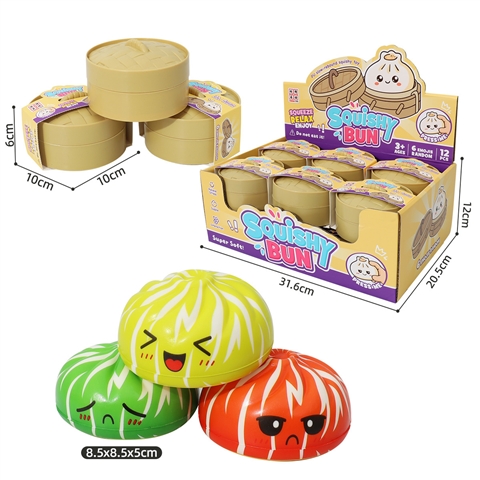
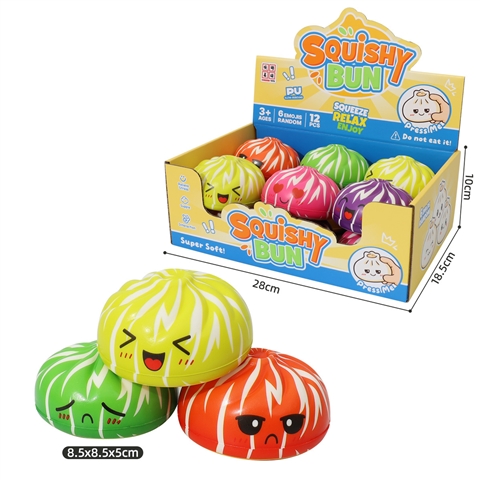
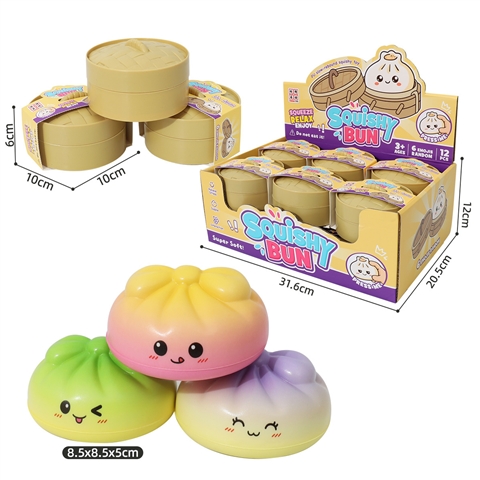
- Five-Color Steamer Baozi Squishy (SKU sqz350815)MOQ: 5 cartons / 720 pcs; packaging: Display Box.
- 8.5 cm Colorful Bead-Filled Baozi Squishy (SKU sqz350809)MOQ: 5 cartons / 720 pcs; packaging: Display Box.
For logo, color or retail-packaging work, review the custom squishy toys OEM and ODM program or send the selected items through the wholesale quote workspace.