
How to Verify OEM and ODM Support for Fidget Toys
How importers verify OEM and ODM support for fidget toys: evidence per SKU, CPC and EN71 report checks, packaging control, MOQ and peak-season lead-time questions.
Verify OEM or ODM support for fidget toys by demanding document evidence tied to your SKU, not a capability claim: a product-specific Children's Product Certificate or EN71 test report matching the exact colour, material and age grade, a named responsible party, a written packaging and artwork approval record, and a written production calendar that states the changeover freeze date. If the supplier can only send a certificate image, a factory video and a verbal "no problem", you have verified marketing, not manufacturing. Decide with the two-part test below: OEM if you own the design and the supplier can prove tooling, spec and document control; ODM if you are adapting an existing mould and can live with shared tooling and a faster path to market.
Key takeaways before you wire a deposit
- OEM and ODM are different verification jobs. OEM means the factory builds to your design and spec, so you verify tooling ownership, material BOM and document control. ODM means the factory owns the mould and you customise colour, logo and packaging, so you verify that the base product already has current test evidence.
- A Children's Product Certificate is product-specific and is not a factory certificate. Ask for the CPC plus the underlying third-party test report from a CPSC-accepted laboratory, and check that the report names the product configuration, age grade and standard edition you are actually buying.
- EU-bound fidget toys fall under the Toy Safety Directive 2009/48/EC and, for general consumer product safety, Regulation (EU) 2023/988. Ask which party is manufacturer and which is importer, because the manufacturer carries the conformity assessment obligation.
- MOQ is per SKU, not per factory. In the product records we can reference, catalogue MOQs on fidget and sensory SKUs run from roughly 35 to 300 pieces, and custom OEM orders should be treated as a separate, usually higher number until the factory puts it in writing.
- Lead time without peak-season notes is fiction. A verbal "quick colour change" in September has missed more vessels than steel problems, so ask for the freeze date, the changeover hours and which press your job is booked on.

Which type of China supplier fits your fidget toy project
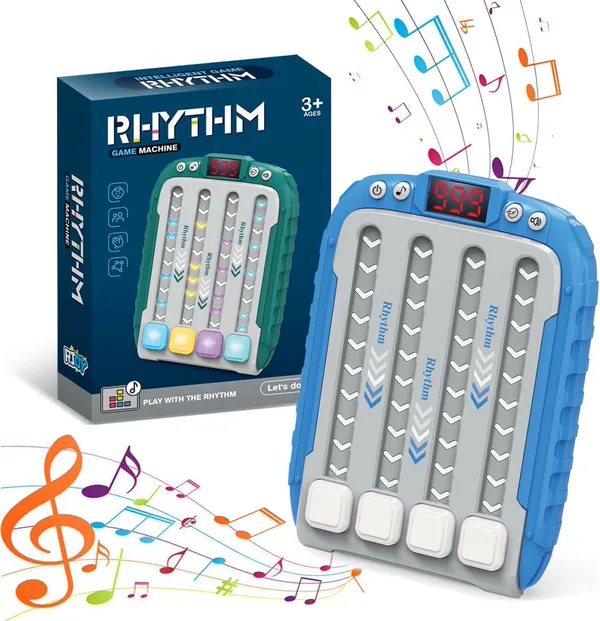
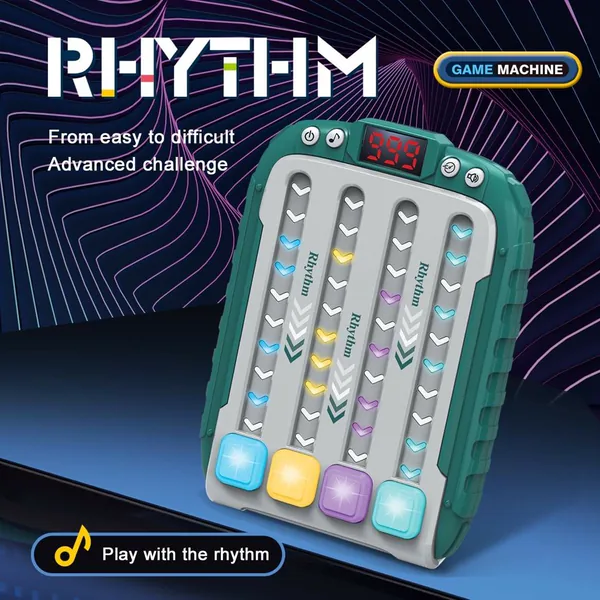
| Chenghai / Shantou plastic fidget factory (Guangdong) | Specialty | Injection-moulded fidgets: pop-it style bubble games, spinners, stress shapes, light-up handheld fidget consoles |
|---|---|
| Chenghai / Shantou plastic fidget factory (Guangdong) | MOQ | varies by spec; catalogue SKUs observed from 35 to 300 pcs, custom OEM higher — confirm in writing |
| Chenghai / Shantou plastic fidget factory (Guangdong) | OEM/ODM | Both, but verify separately: OEM needs your 3D file and a DFM review, ODM needs existing test evidence on the base mould |
| Chenghai / Shantou plastic fidget factory (Guangdong) | Certifications to ask for | CPC plus third-party report, EN71 report, ASTM F963 report, REACH/RoHS statements, material documentation per SKU |
| Chenghai / Shantou plastic fidget factory (Guangdong) | Best for | Buyers who need colour, logo and retail packaging control on a mould that already exists |
| Yiwu trading-led novelty supplier (Zhejiang) | Specialty | Fast assortment building across many novelty SKUs, gift and party-favour mixes, small mixed-carton orders |
| Yiwu trading-led novelty supplier (Zhejiang) | MOQ | varies by spec; often low per SKU because stock is aggregated from multiple workshops |
| Yiwu trading-led novelty supplier (Zhejiang) | OEM/ODM | ODM relabel and packaging common; true OEM tooling usually subcontracted — ask who owns the mould |
| Yiwu trading-led novelty supplier (Zhejiang) | Certifications to ask for | Reports must name the actual producing factory; ask for the factory name on the report, not the trading company |
| Yiwu trading-led novelty supplier (Zhejiang) | Best for | Testing a new fidget category or filling mixed containers before committing to tooling |
| Metal and silicone specialist fidget factory | Specialty | Metal spinners and fidget cubes, silicone and TPR squeeze and chewable sensory items |
| Metal and silicone specialist fidget factory | MOQ | varies by spec; metal machining and silicone tooling usually carry higher entry quantities than plastic |
| Metal and silicone specialist fidget factory | OEM/ODM | ODM stronger on existing spinner and cube platforms; OEM depends on whether machining stays in-house |
| Metal and silicone specialist fidget factory | Certifications to ask for | Material-grade evidence, food-contact or skin-contact statements where claimed, plus the market report for the age grade |
| Metal and silicone specialist fidget factory | Best for | Premium or corporate-gift lines where finish, weight and bearing feel are the selling point |
| Trading company presenting as a factory | Specialty | Wide catalogue across fidget, plush and educational toys with no single production focus |
| Trading company presenting as a factory | MOQ | varies by spec; often quoted low, then revised once the real factory is contacted |
| Trading company presenting as a factory | OEM/ODM | Usually ODM relabel only; OEM tooling is placed with a third party you never audit |
| Trading company presenting as a factory | Certifications to ask for | Ask for the business licence, the producing factory address and the report's named applicant — mismatches are the red flag |
| Trading company presenting as a factory | Best for | Buyers who value assortment speed over traceability, and who accept the added verification layer |
What actually separates OEM from ODM in a fidget toy order?
OEM means the factory manufactures to your design and your specification; ODM means the factory supplies a design it already owns and you customise it. That distinction decides which documents you should be reading. On an OEM project, the documents that matter are your signed spec sheet, the DFM feedback, a mould ownership clause, the sealed pre-production sample and the locked material BOM. On an ODM project, the documents that matter are the base product's existing test evidence, the colour and logo approval record, and confirmation that your customisation did not change the tested configuration.
Most disputes are not about capability. They are about scope. A supplier that genuinely runs ODM will happily show you the existing mould and the current report. A supplier that only relabels will show you a catalogue photo and a price. Ask one question to separate them: "Which SKU-level test report covers the exact configuration I am ordering, and what changes would invalidate it?" A real ODM partner answers that in detail. A trader forwards the question to someone else.
Customisation depth has a cost ladder, and buyers should know where they sit. Logo printing and Pantone colour matching sit at the low end. New packaging artwork, inserts and language variants sit in the middle. A new mould, a new material or a structural change to a light-up or electronic fidget sits at the top, because it changes the tested configuration and usually the tooling investment. If a supplier quotes you a new-mould price without asking about age grade and destination market, they are not treating it as an OEM project.
Which certification documents should you ask for, and what do they prove?
For US-bound children's fidget toys, ask for the Children's Product Certificate and the third-party test report behind it. According to CPSC business guidance, children's toys generally require testing at a CPSC-accepted laboratory and a Children's Product Certificate. The CPC is based on testing results, is product-specific, and identifies the applicable rules and responsible parties — it is not a blanket factory certificate. The certificate and supporting test reports must be in English. Check that the CPC names the exact product, cites each applicable children's product safety rule, identifies the domestic manufacturer or importer with full address and phone, gives a records contact, and states the date and place of manufacture and testing. If the supplier claims an exemption, the CPC should still cite the applicable rule and list the exemption claimed.
For EU-bound fidget toys, ask for evidence tied to Directive 2009/48/EC and the standards the supplier claims to meet. The Directive places the complete conformity assessment procedure on the manufacturer, so your first question is which party is taking that role on your order — and if you place the toy under your own brand or modify it in a way that may affect compliance, you may be taking it on yourself. Importers must indicate their name and address on the toy or packaging, with exceptions where size or nature does not allow it. Traceability records are part of the picture, not an optional extra.
The General Product Safety Regulation, Regulation (EU) 2023/988, sits alongside the toy rules as a separate instrument and covers distance selling including online marketplaces. For your supplier conversation that means asking how safety is assessed across the product lifespan, how warnings and instructions are controlled, and how a recall would be handled if a batch fails. If the fidget toy has digital or connected features, safety, security and privacy by design belong in the same conversation.
One rule applies to every document you receive: never turn a standard or a guidance page into a claim that a specific factory or SKU is certified. The report proves what it names and nothing else. A test report should identify the product configuration, age grade and standard edition, and the applicable edition should be read from the current regulation before you quote it to a retailer. ASTM F963 is a good example — the exact edition and its incorporated regulatory status need checking before anyone puts it on a packaging line.
How do you verify packaging, labelling and traceability controls?
Packaging is where OEM promises break quietly. Ask for the artwork approval record, the language version of the instructions, and the fields that will be printed on the retail pack. A lot or batch code on the package supports recall, complaint investigation and stock segregation when the product or material changes. A production date or date code strengthens traceability, but the format and time zone must be defined so the code is unambiguous. Identifying packaging materials can support sorting and recycling, though the exact marking system depends on the destination rule.
Then test the line, not the promise. In one documented incident, a new SKU started with the previous SKU's labels still in the hopper; the line was stopped, labels, colours and work instructions were cleared, then production restarted. That corrective action is what a controlled factory looks like. Ask your candidate supplier to describe their line clearance procedure for a colour or label change, and ask what record is kept. If the answer is "we are careful", you have no control.
For a distributor selling into schools, the packaging brief is different from a general retail brief. A curate-and-package approach — simple packaging with short instructions in the market language — is what let one school and prize distributor in Bogotá place sensory toys and large pop-its into three private-school sensory corner programmes. The lesson for fidget toy buyers is that packaging and language fit is a commercial feature, not a formality. Build it into the spec sheet before tooling, because changing artwork after the first production run costs both money and a slot in the schedule.
Chenghai, Shantou and Yiwu: what each origin actually gives you
Chenghai, in Shantou, Guangdong, is the dense plastic and novelty toy cluster. Its advantage is proximity: mould shops, injection capacity, printing, assembly and packaging sit within a short drive of each other, which compresses both sampling and rework loops. That density is also the risk. Shared mould shops and overlapping subcontracting mean the factory named on your invoice may not be the factory that ran your parts. Verify the production address, not the sales office address.
Shantou more broadly adds port and export consolidation strength for Guangdong toy shipments. If you are building a mixed container, this is where filler SKUs and main SKUs can be consolidated under one export document set — provided the certificate and report names match the producing entity.
Yiwu, in Zhejiang, is a trading and assortment market more than a single-product manufacturing cluster. Its value is breadth: you can assemble a novelty and party-favour range quickly and test demand with small mixed orders. Its weakness is traceability. When a Yiwu supplier quotes a low MOQ, the goods are often aggregated from several workshops, so the test report may name a producer you never contracted with. Ask for the producing factory's name on the report and reconcile it against the business licence.
A practical rule: source your hero fidget SKU where the mould lives, and source your assortment fillers where the assortment lives. Mixing those two decisions is how buyers end up with a container of good fillers and a hero product they cannot defend to a retailer.
How to verify a Chinese fidget toy supplier in six steps
Step one: business licence and production address. Match the legal company name on the licence to the name on the quotation, the name on the test report applicant, and the factory address you intend to audit. Any mismatch needs an explanation before money moves.
Step two: product-specific documents. Request the CPC and third-party report for US, or the EN71 report and declaration set for EU, naming your exact configuration, colour, material and age grade. Ask which changes invalidate the report.
Step three: sample under production conditions. Order a paid sample from the production line, not a golden sample kept for buyers. Test texture and rebound, check for chemical odour, run a repeated squeeze or push cycle, and inspect print and paint adhesion. Photograph the sample and seal it as the reference.
Step four: factory evidence. Ask for a live or recorded video showing injection machines, raw material storage, assembly and packing lines, and the QC station. A real factory can show the floor on request. A trader will show a catalogue.
Step five: commercial terms in writing. Get the per-SKU MOQ, the OEM MOQ separately, the tooling cost and who owns the mould, the packaging cost, the inspection cost, the Incoterm and the production lead time — with the peak-season freeze date and changeover hours stated, not implied.
Step six: pre-shipment inspection. Book a third-party AQL inspection before the container leaves, and require the AQL level and sampling plan in the purchase order rather than agreeing it afterwards. This is the cheapest insurance in the whole transaction.
MOQ, tooling and lead time: what to put in writing
Catalogue MOQ and OEM MOQ are different numbers. In the product records we can reference, fidget and sensory SKUs carry MOQs from about 35 pieces for a felt busy-book item up to 300 pieces for an ABS busy cube, with plastic light-up fidget consoles in the 120-piece band and a metal fidget cube at 50 pieces. Those figures describe stocked catalogue items. A custom colour, a custom logo, custom packaging or a new mould should be quoted separately, and you should assume the OEM figure is higher until the factory confirms otherwise in writing.
Tooling is where ownership questions get expensive. Ask directly who owns the mould after the order, whether it can be transferred, and what the amortisation or one-off tooling fee covers. If the mould is not yours, your product is not yours. This single clause matters more on ODM-adjacent projects, where the factory already owns the base tool and you are paying for a variant.
Lead time needs a calendar, not an adjective. Ask for the production lead time, the sample approval window, the artwork approval deadline, the last date for colour changes, and what happens if a change request arrives after that date. Peak season mould swaps eat lead time; a verbal "quick colour change" in September has missed more vessels than steel problems. The written version names the freeze date, the changeover hours and which job is on the press.
Sourcing one integrated supplier versus splitting the order
A single integrated supplier gives you one document set, one inspection, one invoice and one party accountable when a retailer asks who tested the product. The trade-off is concentration: if that factory's line slips in peak season, your whole replenishment slips with it, and you lose the price tension that competing quotes create.
Splitting the order across a dedicated plastic fidget factory and a separate packaging or metal specialist gives you better fit per component and a fallback if one line stalls. It costs you coordination: multiple MOQs, multiple document sets, and a packaging step that someone has to own. For a mixed-container importer bringing 20GP or 40HQ loads, splitting is often the practical answer for filler SKUs, while the hero SKU stays with one accountable producer.
Choose integrated if you are launching a branded fidget line and need one compliance story. Choose split sourcing if you are testing categories, filling containers, or hedging a single factory's peak-season risk. Neither is wrong; deciding by accident is.
Frequently asked questions from importers
These are the questions importers raise most often when they are checking whether a fidget toy supplier can genuinely run OEM or ODM work. Each answer points to the document or written term that settles it.
| What is the single fastest way to tell an OEM-capable factory from a relabeller? | Ask which SKU-level test report covers the exact configuration you are ordering and what changes would invalidate it. An OEM-capable factory answers with the report, the tested configuration and the retest trigger; a relabeller forwards the question to someone else. |
|---|---|
| Do I need a CPC, an EN71 report, or both? | It depends on your destination market. US-bound children's toys generally require testing at a CPSC-accepted laboratory and a Children's Product Certificate, per CPSC business guidance. EU-bound toys are assessed against Directive 2009/48/EC. Ask for the document set that matches the market you are selling into, not the one the supplier happens to hold. |
| How do I know the MOQ I am quoted is the real one? | Get the catalogue MOQ and the OEM MOQ as two separate written figures. Catalogue fidget and sensory SKUs we can reference run from roughly 35 to 300 pieces depending on the item, but a custom colour, logo, packaging or mould should be quoted separately and is usually higher. |
| Who is responsible if an EU-bound fidget toy fails a safety requirement? | Under Directive 2009/48/EC the manufacturer alone is responsible for the complete conformity assessment procedure, and importers must ensure third-country toys comply and indicate their name and address on the toy or packaging, with limited exceptions. If you place the toy under your own brand or modify it in a way that may affect compliance, you may be treated as the manufacturer. |
| Is a low MOQ from a Yiwu supplier a warning sign? | Not automatically, but it changes what you must verify. Low MOQ often means goods are aggregated from several workshops, so the test report may name a producer you never contracted. Ask for the producing factory's name on the report and reconcile it with the business licence and the shipment's actual origin. |
| What should the lead-time agreement say about peak season? | Write the production lead time, the sample and artwork approval deadlines, the last date for colour or label changes, the changeover hours, and which press or job slot is assigned to your order. A verbal quick colour change in September has missed more vessels than steel problems, so treat an undocumented promise as no commitment at all. |
OEM and ODM verification FAQ
Does a Children's Product Certificate prove my fidget toy is OEM-capable?
No. A CPC is product-specific evidence that testing was done and rules were cited; it does not prove the factory can run your design, control tooling or manage packaging. Ask for the CPC plus the underlying third-party report, then verify OEM capability separately through the DFM review, mould ownership and sealed sample.
What MOQ should I expect for a custom fidget toy versus a catalogue item?
Expect custom MOQ to be higher than catalogue MOQ, and get both figures in writing. Catalogue fidget and sensory SKUs we can reference run from roughly 35 to 300 pieces depending on the item, but no supplier should be assumed to apply the same number to a custom colour, logo, packaging or mould.
How do I check that an EN71 or ASTM F963 report actually covers my product?
Read the report's product description, age grade, material and standard edition, and confirm they match the configuration you are ordering. A report must match the product, age grade, material and test edition, and the applicable edition should be read from the current regulation before you quote it. If your customisation changes the configuration, ask what needs retesting.
Who is legally responsible if my EU-bound fidget toy fails a safety requirement?
It depends on the role you take. Under Directive 2009/48/EC the manufacturer alone is responsible for the complete conformity assessment procedure, and importers must ensure third-country toys comply and indicate their name and address on the toy or packaging, with limited exceptions. If you place the toy under your own brand or modify it in a way that may affect compliance, you may be treated as the manufacturer — clarify this before the order, not after.
Is a low MOQ from a Yiwu supplier a warning sign?
Not automatically, but it changes what you must verify. Low MOQ often means goods are aggregated from several workshops, so the test report may name a producer you never contracted. Ask for the producing factory's name on the report and reconcile it with the business licence and the shipment's actual origin.
What should be written in the lead-time agreement for peak season?
Write the production lead time, the sample and artwork approval deadlines, the last date for colour or label changes, the changeover hours, and which press or job slot is assigned to your order. A verbal quick colour change in September has missed more vessels than steel problems, so treat an undocumented promise as no commitment at all.
Can I verify a factory without travelling to Chenghai or Shantou?
Yes, to a useful degree. Request a live or recorded video of the injection floor, raw material storage, assembly and QC stations; match the business licence address to the production address; order a paid production-line sample; and book a third-party pre-shipment inspection with a defined AQL level. Remote verification reduces risk but does not eliminate it, so keep the inspection step in every order.
Sources
Related Products & Categories
Request a fidget toy quote or a factory audit
If you are sourcing fidget, pop-it or sensory toys and want the OEM and ODM questions answered with documents rather than adjectives, send your spec sheet, target market and expected volume. You will get back the per-SKU MOQ, the OEM MOQ separately, the applicable test documentation path for your destination market, and a written production calendar that names the freeze date and changeover hours. Ask for a factory audit checklist alongside the quote if you want to run the verification yourself first — SquishyBulk can share a catalogue reference for the product types it builds, but the documents behind them are the part that matters.
Continue the sourcing review
Turn this guide into a quote-ready shortlist. Start with the squishy toys wholesale category, then compare two published SKUs before asking for current freight and document scope.
- Five-Color Steamer Baozi Squishy (SKU sqz350815)MOQ: 5 cartons / 720 pcs; packaging: Display Box.
- 8.5 cm Colorful Bead-Filled Baozi Squishy (SKU sqz350809)MOQ: 5 cartons / 720 pcs; packaging: Display Box.
For logo, color or retail-packaging work, review the custom squishy toys OEM and ODM program or send the selected items through the wholesale quote workspace.