
How to Verify a Squishy Factory's QC Process
A buyer's framework for verifying a squishy factory's QC process: what to ask, what documents to demand, and where supplier claims stop being evidence.
Verifying a squishy factory's QC process means testing four things independently: material traceability per SKU, a sealed golden sample, a written inspection standard with AQL levels, and destination-market compliance documents that name the product and the responsible party. You do not verify QC by reading a factory's website — you verify it by requesting records, comparing a production sample against your approved sample, and watching whether the factory can answer a technical question without a salesperson translating. If a supplier cannot name the material grade and the inspection standard for the exact SKU you are buying, stop and treat that as the finding.
This page covers how to run that verification for sensory and squishy toys sourced from China — what to ask in the first email, which documents are product-specific versus factory-level, where MOQ and lead time sit in the decision, and how to tell a real QC function from a marketing page. It is written for importers, distributors, and online sellers who need a defensible approval decision, not a supplier brochure.
What Should You Check First at a Comprehensive Squishy Manufacturer?
Start with the factories whose order flow you can actually inspect. A comprehensive squishy OEM/ODM supplier typically publishes a sequence — inquiry, sample, approval, mass production, ship — and that sequence is where your verification checklist attaches. Ask for the sample-stage duration, the mass-production window, and what happens between approval and packing. A supplier that quotes a sample lead time and a separate bulk lead time is describing two different QC gates; one that blurs them into "about a month" is telling you the process is not documented.
The claims buyers encounter most often on these pages are factory-level, not product-level: an in-house QC lab, an inspector headcount, an on-time delivery percentage, monthly unit volume, a certification such as ISO 9001. Treat every one of those as a question, not an answer. ISO 9001 is a quality-management-system certificate, not a statement that a specific squishy SKU passed a specific test. An inspector count tells you nothing about whether the inspection uses a written standard or a visual glance. Ask which SKU the number applies to and who signed the record.
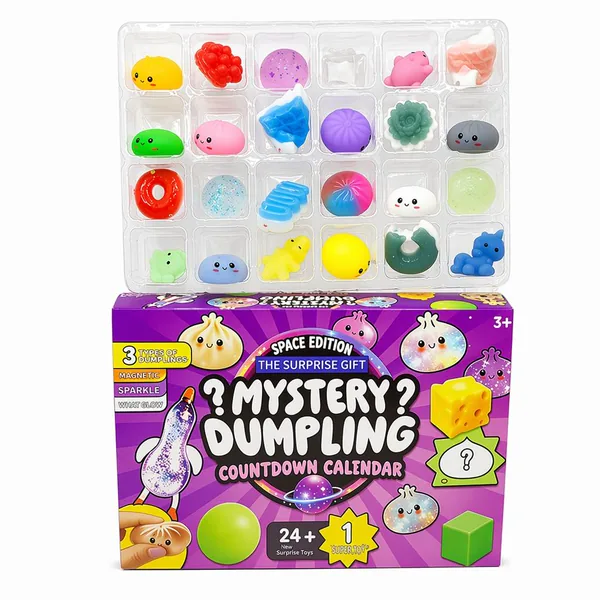
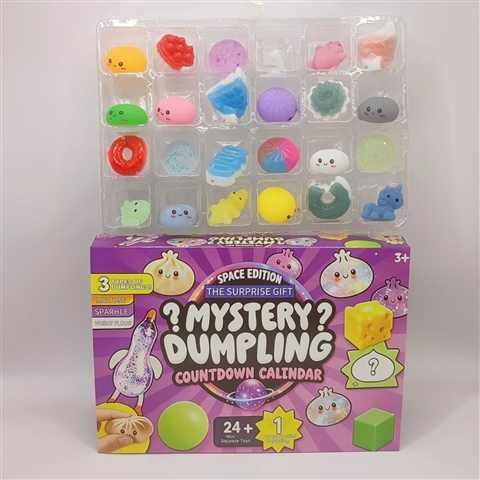
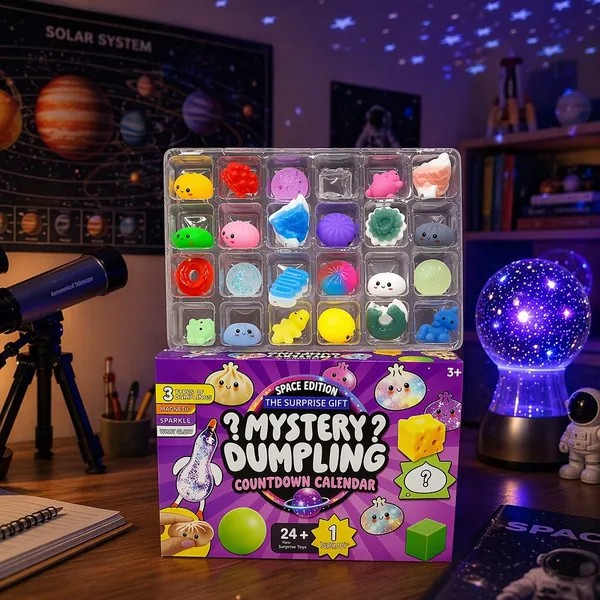
When a supplier publishes reference MOQs and carton data, read them as catalog records rather than quotes. A countdown-calendar SKU recorded at a reference MOQ of 240 pieces with colour-box packing and 48 units per carton, or a display-box bun SKU at 864 pieces and 288 units per carton, tells you how the factory packs and what volume it plans for — nothing more. Before you order, reconfirm the sample, the current price, the age evidence, and the destination documents for your market. Those four reconfirmations apply to every supplier you shortlist, not just the one you are leaning toward.
Manufacturers at a Glance
| SquishyBulk (Chenghai/Shantou, Guangdong) | Specialty: PU foam, TPR/TPE, silicone and ABS sensory/squishy toys, countdown calendars, display-box sets | MOQ: reference MOQs recorded per SKU, commonly 240–864 pcs; varies by spec | OEM/ODM: both | Certifications: ask factory — request product-specific test reports and destination documents |
|---|---|
| Zhuchuang (China) | Specialty: stress-relief squishy toys in bun, fruit, vaseline, clay, coconut-oil and maltose categories | MOQ: trial orders stated as low as 200 pcs with mixed MOQ across products; confirm in writing | OEM/ODM: both — logo printing, colour, size development, pack design | Certifications: ISO 9001 cited; ask factory for the current certificate scope and product-specific test reports |
| EDNTOY (China) | Specialty: custom PU, silicone and TPR squishy toys; ready-to-order designs | MOQ: flexible, matched to material and production method; varies by spec | OEM/ODM: both — shape, colour, logo, packaging, target hand feel | Certifications: ask factory for the test report matching your SKU, age grade and destination market |
| SentiaPlay (Shenzhen, Guangdong) | Specialty: PU slow-rising foam and TPR squeeze toys, dumpling and cube formats | MOQ: 500 pcs per design for catalog items; fully custom OEM programs typically start at 1,000 pcs | OEM/ODM: both — 3D sampling to mass production | Certifications: EN71 / ASTM F963 / CPSIA / CE support claimed; third-party testing via SGS, BV or Intertek — verify the report per SKU |
| Yinuo (China) | Specialty: custom squishy toys, vinyl and injection-moulded toy production | MOQ: lower MOQs claimed; confirm per design | OEM/ODM: both | Certifications: EN71 and ISO referenced for materials; ask for the report that names your product and age grade |
How Does QC Differ by Category — Foam, Rigid Plastic, and Plush?
Squishy and PU-foam toys are the hardest category to QC because the failure modes are sensory, not dimensional. Slow-rising foam can be over- or under-formulated between batches, hand-painted faces vary by painter, and filled products leak at the seal. Your inspection standard has to name the rebound time, the surface finish and the seal integrity, not just the dimensions. A display-box product such as the Rainbow Mini Bun Squishy with Steamer Display Box is recorded at a reference MOQ of 864 pieces and 288 units per carton — those carton and packing records are what let you write a packing-verification step, but they say nothing about how the foam behaves three months after moulding.
Rigid plastic and ABS sensory items sit at the other end. Dimensions, gate marks and assembly fit are inspectable with calipers and a checklist, and small-parts risk becomes the dominant question because detachable pieces drive age grading. If you are importing an educational or teething item into the US, the question is not "does the factory have a certificate" but "does the test report name this configuration, this age grade and the applicable standard edition."
Plush and mixed-material sensory products add fabric, stuffing and stitching to the QC surface, and they usually route through a different factory cluster than moulded squishies. If your range spans all three categories, plan separate verifications. One audit of one line does not cover a supplier's foam, plastic and plush production, even when the same trading entity sells all three.
What Documents Should You Demand Before Approving a Squishy Factory?
Demand four things and match each to the exact SKU. First, a material declaration naming the grade — PU foam, TPR, TPE, silicone or ABS — because "mixed sensory-toy materials" is a catalog label, not a specification. Second, a test report from an accredited laboratory that identifies the product configuration, the age grade and the standard edition; check the current edition of the regulation before you quote it, and note that a report must match the product, age grade, material and test edition to be worth anything. Third, the conformity paperwork for your market: for the EU, toy products must meet the applicable essential safety requirements of the Toy Safety Directive 2009/48/EC, with CE marking and an EU Declaration of Conformity matched to the product scope; for the US, children's toys generally require testing at a CPSC-accepted laboratory and a Children's Product Certificate, and the CPC is product-specific — it is not a blanket factory certificate and must not be described as one.
Fourth, tracking and lot control. Tracking information should be permanent and support product identification where applicable, and packaging markings and lot control need to be reviewed together, because a change in packaging artwork is a controlled change. The General Product Safety Regulation (EU) 2023/988 is a separate legal instrument from the Toy Safety Directive; map importer, manufacturer and product-identification information to your actual market role before you publish anything on a label.
One more document most buyers forget: a non-use and non-disclosure agreement covering your drawings, colour standards and test requirements. A moulder holding your tooling and artwork without a non-use clause is one slow season away from selling your product to someone else. Sign it before you send the first CAD file, not after the first sample.
How Do You Verify QC Without Visiting the Factory?
Run the golden-sample test. Approve a physical sample, seal it, keep a duplicate, and require that the pre-production sample match it on hand feel, rebound, colour and surface finish. Then require a pre-shipment inspection against that sealed sample, with photographs and video, and confirm in writing whether a third-party inspection company is permitted on site. A factory that says third-party inspection is "accepted" has told you it is allowed, not that it is performed — those are different commitments and your purchase order should say which one you bought.
Ask for the inspection standard in writing: the AQL level, the sampling plan, the defect classification, and who signs the report. Then test the answer. Send a technical question about the seal on a filled product or the rebound spec on a slow-rising foam and see who replies. If the answer comes back vague and sales-flavoured, the QC function is a page, not a process. If a supplier offers a production-tracking dashboard or a late-delivery penalty clause, ask for the dashboard demo and the contract clause wording before you treat either as protection.
Finally, verify the commercial facts that shape your cash flow: the reference MOQ per design, the sample lead time versus bulk lead time, the units per carton, and the carton dimensions and gross weight. Missing size or weight data on a catalog record is not a red flag by itself, but it is a field you must fill before you book freight — a size field that reads as a malformed string should be reconfirmed, not assumed.
FAQ
Is an ISO 9001 certificate enough to approve a squishy factory?
No. ISO 9001 is a quality-management-system certificate covering the factory's processes, not a statement that your specific SKU passed a specific test. Ask for the current certificate scope and pair it with a product-specific test report that names the configuration, age grade and standard edition.
What is a Children's Product Certificate and does it cover the whole factory?
A CPC is product-specific and is based on testing results, identifying the applicable rules and responsible parties. It should never be described as a blanket factory certificate. If a supplier offers "our CPC" covering everything they make, ask which product it names. Beginning July 8, 2026, importers of most regulated consumer products will be required to electronically file certificate data — check the current CPSC guidance before you rely on a paper copy.
What MOQ should I expect for a custom squishy order?
It varies by spec. Catalog squishy items commonly sit in the low hundreds to roughly a thousand pieces per design, while fully custom tooling programs usually start higher. Published examples range from reference MOQs of 240–864 pieces on display-box bun and countdown-calendar SKUs to flexible per-design minimums matched to material and production method. Treat every number as a reference to reconfirm in the current quote.
Can I verify QC remotely, or do I need a third-party inspection?
You can verify a great deal remotely if you insist on records: sealed golden sample, written AQL and defect classification, pre-shipment inspection with photos and video, and lot control on the packing. A third-party inspection adds an independent pair of eyes, but confirm in writing that it is actually booked and who pays — "accepted" on a supplier page is permission, not a scheduled inspection.
Which certifications should a squishy toy have for the EU versus the US?
For the EU, the applicable framework is Toy Safety Directive 2009/48/EC, with CE marking and an EU Declaration of Conformity matched to the product scope, plus separate obligations under the General Product Safety Regulation (EU) 2023/988. For the US, children's toys generally require testing at a CPSC-accepted laboratory and a Children's Product Certificate, with ASTM F963 and 16 CFR Part 1250 relevant depending on the product. Always read the current consolidated text and match the report to your SKU.
What is the fastest way to spot a factory with no real QC process?
Ask a technical question that a salesperson cannot answer — the seal spec on a filled product, the rebound target for a slow-rising foam, or the defect classification in their inspection standard. Vague, generic replies, or a refusal to name the inspection standard, tell you more than any factory tour video.
Sources
Related Products & Categories
Request a Quote or a Factory Audit
If you are ready to move from framework to decision, send us the SKU or the concept, your target market, and the age grade you intend to sell under. We will come back with the reference MOQ, the sample lead time, the current price and the compliance documents we can actually produce for that configuration — and we will tell you plainly which fields still need reconfirmation. If you would rather audit first, ask for a factory audit and specify whether you want your own inspector or a third party on site. You can start by browsing the squishy and squeeze range, or send your spec directly and we will tell you what is verifiable and what is not.
Continue the sourcing review
Turn this guide into a quote-ready shortlist. Start with the squishy toys wholesale category, then compare two published SKUs before asking for current freight and document scope.
- Five-Color Steamer Baozi Squishy (SKU sqz350815)MOQ: 5 cartons / 720 pcs; packaging: Display Box.
- 8.5 cm Colorful Bead-Filled Baozi Squishy (SKU sqz350809)MOQ: 5 cartons / 720 pcs; packaging: Display Box.
For logo, color or retail-packaging work, review the custom squishy toys OEM and ODM program or send the selected items through the wholesale quote workspace.