
How to Evaluate Supplier Communication on Custom Squishies
Evaluate squishy suppliers by response discipline, tech packs, retained samples, line clearance records, and packaging data. Includes a shortlist table and FAQ.
Judge a custom squishy supplier by the evidence it volunteers before you ask. A supplier worth shortlisting will hand over a tech pack with tolerances, a retained-sample protocol, a line-clearance record, and carton data without pressure. If those documents do not exist, the relationship is built on assumption.
This page gives you a framework: what to ask, what proof to collect, and where the missing item should stop the order. It covers tech packs, retained samples, line clearance, packaging data, MOQ, lead time, and the support behavior that predicts whether a mixed label or an unapproved color reaches your retailer.

Shortlist criteria: what to ask, what proof to collect, and when to walk
| Response discipline — ask: who is the single accountable contact, and on which channel are approvals logged? | Proof to collect: reply-time log on at least five technical questions and a named escalation path. Fail if approvals arrive only by voice message with no written record. |
|---|---|
| Tech pack completeness — ask: does the spec state measurements, materials, color codes (Pantone/RAL), stitching, packaging dimensions, and tolerances? | Proof to collect: a version-controlled tech pack with revision numbers. Fail if the supplier quotes price from a photo without a written spec. |
| Retained samples — ask: will you keep a sealed sample identified by model and lot? | Proof to collect: a sample-retention protocol that links each retained piece to model and lot for later color, construction, packaging, and failure comparison. Fail if the only reference is a production photo. |
| Line clearance — ask: what happens when a new SKU starts and the previous SKU's labels are still in the hopper? | Proof to collect: a written stop-clear-restart procedure covering labels, colors, and work instructions. Fail if the answer is "we will be careful." |
| Packaging deliverables — ask: can you supply retail-ready packaging and pieces-per-carton data for packing lists? | Proof to collect: a packaging mockup, barcode quiet-zone check, and carton data sheet. Fail if pieces-per-carton is confirmed only after the deposit. |
| Lot code on packaging — ask: how is the lot or batch code applied? | Proof to collect: a sample package showing the code and its position. Fail if no code exists, because recall, complaint investigation, and stock segregation collapse without it. |
| Lead-time breakdown — ask: separate tooling, first sample, testing, production, packaging, and shipping. | Proof to collect: a milestone schedule with dependencies. Fail if the supplier offers one total number without naming what can slip. |
| MOQ and customization path — ask: what is the MOQ for stock colorways versus new tooling, and which route is OEM or ODM? | Proof to collect: a written MOQ ladder per route. Fail if MOQ changes between the quote and the proforma invoice. |
| Compliance evidence — ask: which test reports exist per SKU and per material? | Proof to collect: current third-party lab reports tied to your materials and SKUs. Fail if the supplier offers a general certificate that names neither your material nor your SKU. |
| After-sales process — ask: what does a corrective action report look like when a defect is found? | Proof to collect: one past corrective action example, redacted if needed. Fail if the supplier has no template and no rework policy. |
Where custom squishies are typically made
Squishy and plastic-toy production clusters in Chenghai, Shantou (Guangdong), where mold makers, injection and silicone processors, electronics suppliers, and packaging printers sit within a short drive of each other. Buyers searching for soft-touch, slow-rise, or pop-it style items usually start there because the component ecosystem shortens development cycles. Wooden toys concentrate in Yunhe (Zhejiang), plush in Yangzhou (Jiangsu), and general merchandise and small accessories in Yiwu (Zhejiang). The hub is a shortlist filter, not a qualification: a Chenghai address does not prove the factory owns its machines or can hold color across lots.
The practical test is whether the supplier can point to the specific capability your product depends on — a silicone or TPR formulation, a slow-rebound compound, a printed insert, or a retail-ready box. Ask which step is done in-house and which is subcontracted, then ask for the subcontractor's name. A supplier that answers clearly is giving you a map of its risk. A supplier that answers vaguely is giving you a preview of your production problems.
One factory in this cluster, SquishyBulk, uses line clearance as a control point: when a new SKU starts and the previous SKU's labels are still in the hopper, the line is stopped, labels, colors, and work instructions are cleared, then production restarts. That is the kind of concrete process evidence you should demand from any candidate, not just one.
What does a tech pack need to contain before a squishy quote is valid?
A valid quote rests on a tech pack that states dimensions, materials, color codes (Pantone or RAL), stitching or seam construction where relevant, packaging dimensions, and tolerances. If any of these are missing, two suppliers can quote the same photo and describe different products. The comparison then looks like a price gap when it is actually a specification gap.
Ask for the revision number and the date of the last change. A supplier that treats the tech pack as a living document will update it after every approved sample; one that treats it as a one-time attachment will let the factory floor work from memory. The difference shows up in the first production run, not in the sample.
Color is the most common drift point on squishies because silicone and soft PVC compounds can shift batch to batch. A tech pack that names a Pantone code is the minimum; a supplier that also retains a physical approved color chip is the one that can defend the match three months later.
Why retained samples and line clearance are the two strongest communication signals
Retained samples support later comparison of color, construction, packaging, and failure investigations, and they should be identified by model and lot. When a retailer reports a split seam or a wrong color, the supplier either has the reference lot or it does not. Without it, the conversation becomes a debate about memory.
Line clearance is the other signal because it is boring until it fails. A mixed label reaching a retailer is a recall, a chargeback, or a lost account. A supplier that documents stop, clear, and restart — covering labels, colors, and work instructions — is telling you it treats changeover as a controlled event. Ask to see the record from a recent changeover, not a blank template.
Both signals are cheap for a good factory and expensive for a bad one. That asymmetry is why they belong near the top of your evaluation, ahead of price.
What packaging and carton data should arrive before the deposit?
Pieces-per-carton, carton dimensions, gross and net weight, and retail-ready packaging mockups should be confirmed in writing before you pay the deposit. A mixed-container importer cannot plan CBM without them, and a retailer cannot plan shelf layout without the box. If these numbers appear only after production, you have lost the ability to negotiate freight and to correct a packaging error.
Two packaging details are worth flagging. First, a barcode needs a clear quiet zone around the symbol so scanners detect its boundaries reliably; a graphic designer who crowds the barcode creates a scanning failure at the store. Second, a lot or batch code on the package supports recall, complaint investigation, and stock segregation when the product or material changes. Ask where the code sits and confirm it on the mockup.
Material identification on packaging can support sorting and recycling, but the exact marking system depends on the destination rule. Do not accept a supplier's blanket statement that the packaging is "recyclable compliant" without naming the destination and the marking standard it follows.
How should lead time be broken down for a custom squishy order?
Toy lead time should distinguish tooling, first sample, testing, production, packaging, and shipping because one total number hides different dependencies. A supplier that quotes "30 days" without separating these stages cannot tell you which stage will slip when a color is rejected or a test fails.
Ask for a milestone schedule with named dependencies: what must be approved before tooling starts, what must pass before production starts, and what must be confirmed before packaging prints. Then ask what happens to the schedule if one milestone fails. The answer tells you whether the supplier plans or improvises.
Chinese New Year, Golden Week, and Mid-Autumn Festival compress capacity and slow approvals. A supplier that flags these windows in the schedule is communicating; one that discovers them after you have committed to a launch date is not.
What compliance evidence should a squishy supplier provide?
Ask for current third-party lab reports tied to your specific materials and SKUs, and read the report's scope before you accept it. A general certificate that names neither your material nor your SKU does not transfer risk. For US-bound goods, the relevant framework includes ASTM F963, CPSIA (lead and phthalates), and a Children's Product Certificate where applicable; for EU-bound goods, EN71-1/2/3, REACH, and a CE Declaration of Conformity. The importer remains responsible for confirming which rules apply to the age grade and destination.
Historical recalls show why this matters. In 2008, a US recall of toy racing cars cited surface paint with lead above the federal lead paint standard. In 2026, a US recall of children's flashcard talking toys cited lead and phthalates above federal bans, plus a failure of short-circuit protection for battery-operated toys. These are external official records, not findings about any current supplier, and they are not connected to this site's supplier, customers, or SKUs. They are useful as verification prompts: ask your candidate how lead and phthalate control is documented, and if the product has a battery, how short-circuit protection is validated.
If the supplier cannot name the lab, the report date, and the material tested, treat compliance as unverified. That is a stop condition, not a negotiation point.
How to test communication before you commit a deposit
Run a paid sample and treat it as a communication test, not a product test. Send a written question set with five technical items, note the response time and completeness, then compare the sample against the tech pack. If the sample arrives with an unexplained substitution in material, color, or packaging, you have learned something more valuable than the sample itself.
Next, ask for one past corrective action report, redacted if necessary. A supplier with a real quality system will have one; a supplier that only assembles will not. Then ask for the retained-sample protocol and the line-clearance record. If both exist in a usable form, the supplier is ready for a small trial order.
Finally, check the commercial paperwork: proforma invoice, Incoterm, payment milestones, and the MOQ ladder for stock colorways versus new tooling. A supplier whose MOQ changes between the quote and the proforma invoice is not communicating; it is testing you.
| Step 1: Send a five-question technical RFQ | Measure response time and completeness. Fail if answers are vague on material, color, or packaging. |
|---|---|
| Step 2: Approve a paid sample | Compare the physical sample against the tech pack, including packaging and barcode quiet zone. Fail if substitutions appear without notice. |
| Step 3: Request one corrective action report | A redacted example is acceptable. Fail if no template or rework policy exists. |
| Step 4: Request retained-sample and line-clearance records | Confirm the retained sample is identified by model and lot. Fail if the only evidence is a production photo. |
| Step 5: Confirm commercial paperwork | Check proforma invoice, Incoterm, payment milestones, and MOQ ladder. Fail if MOQ changes between quote and invoice. |
What a mixed-container buyer should require beyond the sample
If you are filling a 20GP or 40HQ with assorted squishies alongside other categories, your supplier's communication has to support your retail story, not just your carton count. A mixed-container importer in Lima needed high-turnover filler to complete CBM alongside outdoor goods, and generic unbranded filler complicated his storytelling to Peruvian retailers. The supplier's response was to provide a block of squishies and pop-its in assorted colors, retail-ready packaging, and pieces-per-carton data for packing lists. No sales or reorder result is recorded for that project, so treat it as a packaging and data deliverable, not a performance claim.
For your own program, require the pieces-per-carton sheet, the packaging mockup, and the lot code position before the deposit. Then require the same data on the final shipping documents. If the numbers change between the mockup and the packing list, you need to know why before the container leaves.
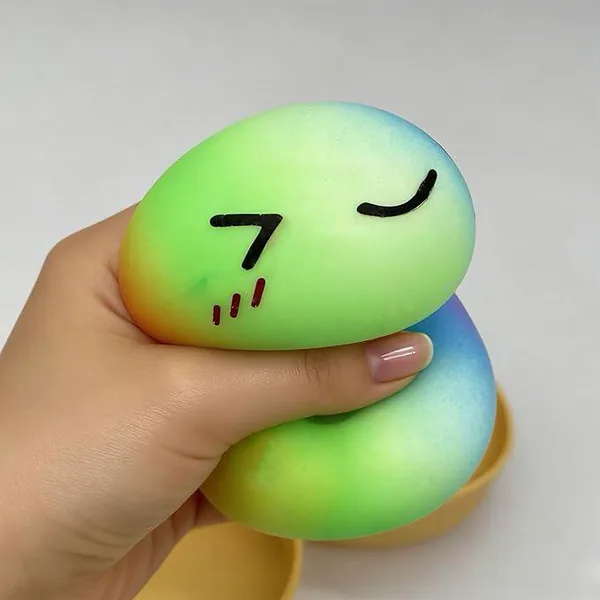
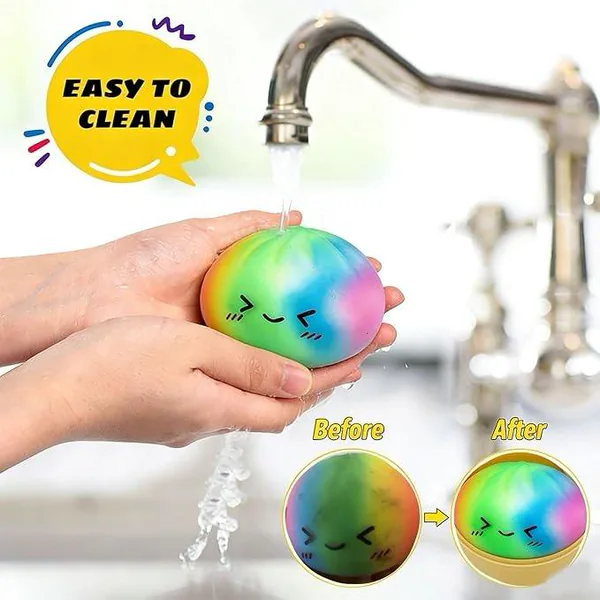
One product that illustrates retail-ready presentation is the Colorful Silicone Dumpling Squishies Fidget Toy with Steamer Box Soft Squeeze for Anxiety Relief and Kids, which pairs a soft silicone body with a steamer-box format. The point is not the item; it is that the box, the barcode, and the carton data have to be specified together.
FAQ: evaluating supplier communication on custom squishies
How do I test a squishy supplier's communication before placing a bulk order?
Send a written five-question technical RFQ and measure response time, completeness, and whether the supplier asks clarifying questions. Then order a paid sample and compare it against the tech pack. If the sample shows unexplained substitutions in material, color, or packaging, the communication is not production-ready.
What documents should a custom squishy supplier provide with a quote?
A version-controlled tech pack with dimensions, materials, color codes, stitching, packaging dimensions, and tolerances; a written MOQ ladder for stock colorways versus new tooling; a milestone lead-time schedule; and a packaging mockup with pieces-per-carton data. Compliance reports tied to your material and SKU should follow before production.
What is a retained sample and why does it matter for squishies?
A retained sample is a sealed reference piece identified by model and lot, kept to support later comparison of color, construction, packaging, and failure investigations. It matters on squishies because silicone and soft compounds can shift batch to batch, and without a reference lot a color dispute becomes a debate about memory.
Which certifications apply to squishy toys sold in the US and EU?
For US-bound goods, the relevant framework includes ASTM F963, CPSIA lead and phthalates limits, and a Children's Product Certificate where applicable. For EU-bound goods, EN71-1/2/3, REACH, and a CE Declaration of Conformity apply. The importer remains responsible for confirming which rules match the age grade and destination, and reports should name your material and SKU.
How should lead time be structured for a custom squishy order?
Break it into tooling, first sample, testing, production, packaging, and shipping, with named dependencies and approval gates. A single total number hides which stage will slip. Also flag Chinese New Year, Golden Week, and Mid-Autumn Festival, which compress capacity and slow approvals.
What packaging data should I confirm before paying a deposit?
Confirm pieces-per-carton, carton dimensions, gross and net weight, retail-ready packaging mockup, barcode quiet zone, and the position of the lot or batch code. These numbers drive freight planning and shelf layout, and they should appear again on the final packing list. If they change between mockup and shipping documents, ask why before the container leaves.
Sources
Related Products & Categories
Request a quote or a factory audit
If you want to run this evaluation on a live program, request a quote or a factory audit and the team will walk you through the tech pack, retained-sample protocol, line-clearance record, and packaging data for your specific squishy SKU.
Continue the sourcing review
Turn this guide into a quote-ready shortlist. Start with the squishy toys wholesale category, then compare two published SKUs before asking for current freight and document scope.
- Five-Color Steamer Baozi Squishy (SKU sqz350815)MOQ: 5 cartons / 720 pcs; packaging: Display Box.
- 8.5 cm Colorful Bead-Filled Baozi Squishy (SKU sqz350809)MOQ: 5 cartons / 720 pcs; packaging: Display Box.
For logo, color or retail-packaging work, review the custom squishy toys OEM and ODM program or send the selected items through the wholesale quote workspace.