
Freight Spike: Should You Densify High-Cube Squishy Cartons?
Compare squishy carton CBM, pack density, strength and recovery before changing packs. Use measured cartons and your own freight quote—not rate guesses.
Respond to a freight spike by removing avoidable packing space from lightweight, high-cube squishy cartons before reducing piece count. Approve denser inner packs only when closed-carton measurements show a cube reduction, the loading plan makes that reduction useful, and the product retains its approved condition. Compare the current and proposed packs using the same order quantity, unchanged retail packaging and your own current freight quote. Smaller cartons are a purchasing option—not proof of a lower freight bill.
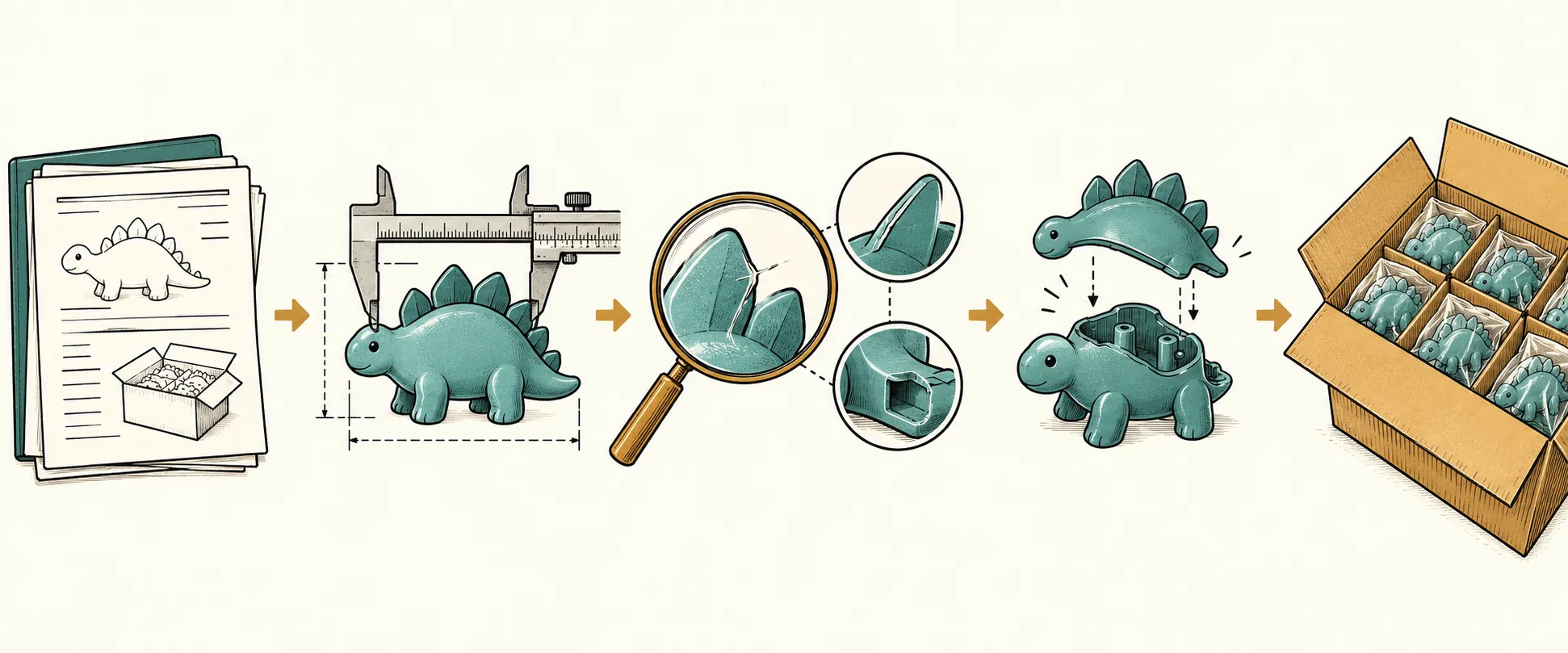
What makes lightweight squishy cartons sensitive to freight changes?
Lightweight squishy cartons can exhaust available loading space before reaching payload limits, making unused cube a practical cost concern. Supplier loading guidance describes this volume-limited pattern for light, air-rich squishy shipments. Check the actual shipment rather than assuming that every squeeze toy has the same packing behavior. Container Loading Guide
The useful measure is pieces per cubic meter of the closed shipping carton, not how tightly an individual toy can be squeezed. A denser inner arrangement has no shipping-cube benefit if the outer carton stays the same size and carries the same quantity.
Use a freight-index movement as a prompt to refresh the comparison, not as a substitute for a lane quote. For volume-priced shipments, lower measured CBM may change the charge. For a whole-container booking, smaller cartons may improve loading capacity without changing the price of that booked container.
Which packing change should buyers try first?
| Reorient the existing inner packs | Choose this first when a trial pack can remove avoidable gaps without changing retail packaging or pressing on the toys. Approve only after measuring the resulting closed carton and confirming repeatable pack-out. |
|---|---|
| Revise separators or the outer-carton fit | Consider this when the current packing architecture leaves unused space. Preserve necessary protection, then recheck carton strength, closure and the proposed stacking arrangement. |
| Compress slow-rising PU foam | Treat this as a separate trial, not the default density adjustment. Require an agreed compression-and-recovery screen before accepting a compressed packing configuration. |
| Retain the current configuration | Choose the current pack when the candidate damages presentation, weakens the carton, complicates receiving or produces no worthwhile saving under the actual freight quote. |
What should the per-SKU carton inspection and decision sheet record?
| 1. Identity and packing revision | Record: purchase-order reference, item identifier, carton type, inner-pack configuration, revision, inspection date and carton identifiers checked. Compare with the approved packing specification. An unapproved revision or mixed configuration calls for segregation and confirmation before the shipment calculation is accepted. |
|---|---|
| 2. Closed-carton dimensions and CBM | Measure external length, width and height in centimeters on the filled, sealed carton, including bulging. Retain measurement photographs and calculate CBM using the same method for both configurations. Compare with the approved target and agreed tolerance. A difference outside tolerance requires remeasurement, packing correction or a revised loading and cost calculation. |
| 3. Pieces per carton and total carton count | Compare carton marks, packing-station counts or scan records, inner-pack quantity and the physical carton tally with the approved configuration and order quantity. Investigate inconsistent counts or mixed pack quantities. Gross weight can flag an anomaly but does not establish the exact piece count; use a controlled count verification when needed. |
| 4. Gross and net weights | Weigh the closed carton and record gross weight in kilograms. Reconcile net weight through product-count and pack-out records, using the same net-weight definition in both versions. Compare with the approved packed reference and packing list. An unexplained difference calls for checking count, packaging tare and recording units before accepting the figures. |
| 5. Carton strength, condition and closure | Compare the specified board construction and agreed packaging-strength evidence with the carton supplied. Inspect for crushing, bulging, damaged seams and opening closures. Visual inspection does not establish stacking strength. Reject damaged cartons for repacking; where construction or loading has changed, obtain the agreed strength verification before approving the stack. |
| 6. Shipping marks and barcode handling | Compare item identification, quantity, carton numbering and buyer-required routing marks with the approved artwork and packing list. Check that labels remain readable and required barcodes scan. Correct wrong or obscured labels and recheck them before release. Keep destination-specific paperwork checks separate from this commercial marking review. |
| 7. Loading-plan fit | Compare final dimensions and weights with the written loading plan, including carton orientation, layer count, stack height, pallet use where applicable and estimated cartons loaded. A changed footprint or unsupported stack requires a revised plan; a theoretical CBM saving alone does not prove that another row or layer fits. |
| 8. Final packing-list reconciliation | Match the physical carton tally, final quantities, dimensions, gross and net weights, and total CBM to the packing list generated from actual pack-out. Resolve discrepancies and issue the corrected document revision before accepting the final shipment figures. |
| 9. Decision, ownership and closure | Record current versus proposed landed cost per piece, recovery-screen result where applicable, and the decision: approve, approve with stated conditions, or retain the current pack. Name the responsible approver and approval date. Assign each corrective action an owner and due date, then record closure evidence, reviewer and date. |
How do you calculate a denser pack's CBM benefit without cutting pieces?
Calculate external carton volume first, then multiply by carton count while keeping the shipment's total piece count unchanged.
The Rainbow Mini Bun Squishy Display Box provides a useful configuration reference: its catalog record lists PU foam, display-box packing and 288 pieces per carton. That count belongs to this specific configuration; confirm it for the order rather than applying it to other squishies. Product dimensions are not shipping-carton dimensions.
Explicitly hypothetical example: assume 100 cartons, each holding 288 pieces, for 28,800 pieces total. The current closed carton measures 60 × 40 × 50 cm. Its CBM is L(cm) × W(cm) × H(cm) / 1,000,000 = 60 × 40 × 50 / 1,000,000 = 0.120 m³. Multiply by carton count: 0.120 × 100 = 12.0 m³.
Now assume a trial arrangement preserves the same 288 pieces and retail packaging but produces a closed carton measuring 60 × 40 × 45 cm. Its volume is 0.108 m³; 100 cartons occupy 10.8 m³. The hypothetical reduction is 1.2 m³, or 10%, with no reduction in pieces.
That is a 10% reduction in carton cube—not a demonstrated 10% freight saving. Confirm the revised stacking pattern, handling requirements and quote calculation. If the shorter carton does not change billable volume, container requirements or another quoted charge, the immediate freight saving may be zero.
When should compression block approval of a denser pack?
Block compression-based approval when the packed product cannot recover to the buyer's agreed presentation and condition criteria after unpacking.
Supplier guidance cautions that slow-rising PU foam held under compression can arrive deformed and suggests a two-week compression-and-recovery trial on an approved sample. Use that duration only as a proposed buyer-defined screen, not as an industry standard or a simulation that proves performance throughout the voyage. Container Loading Guide
Run the trial in the proposed inner arrangement and closed carton. Record the product and packing revision, compression method, hold conditions, hold duration and agreed recovery observation times. Compare the unpacked result with an uncompressed approved reference for shape, visible finish damage and retail-pack condition.
Set acceptance criteria before the trial. Persistent distortion, finish damage or damaged retail packaging should trigger less compression, a revised arrangement or retention of the current pack. A successful screen supports that packing decision only; it does not certify product safety or predict a return rate. Product-safety release remains a separate check.
How do you confirm that denser inner packs improve landed cost?
Approve densification only when the current quote and final packing evidence show a worthwhile net benefit after added packaging and handling costs.
Compare the current and candidate packs under the same current freight quote, shipment quantity, destination and service scope. This isolates the packing decision. Compare the older quote with the current quote separately if you also need to measure the freight increase.
For each configuration, calculate landed cost per piece as the total comparable shipment cost divided by the same total piece count. Include goods cost, packing cost, quoted freight, applicable handling and receiving costs, and other unchanged landed-cost items. Apply the quote's actual charging method and minimums; do not replace them with an assumed ocean rate.
For a volume-priced quote, ask the forwarder to confirm the charge using the final CBM. For a whole-container quote, compare the written loading plans and the number of containers actually required. More available capacity is useful, but unused capacity is not a cash saving on an unchanged booking.
Also price any added packing labor, revised separators or destination repacking required by the candidate. Protecting unit economics means comparing the complete change, not celebrating a smaller number on the carton drawing.
What evidence closes the carton-density decision?
Close the decision with final packed measurements, an updated loading plan, a reconciled packing list and a dated approval of the selected packing revision.
Request the packing list from actual pack-out rather than simply copying the purchase order. Reconcile carton counts through physical tally and packing records, then confirm final pieces, dimensions, weights and total CBM. This follows practical packing-list guidance for squishy exports. Palletizing and Carton Specs
Release the denser configuration when it meets the agreed carton tolerances, count, strength, marking and recovery conditions and delivers an acceptable cost result. Correct and recheck discrepancies outside those conditions; keep the current configuration when the candidate offers no worthwhile benefit.
The signed record identifies what was checked and approved. It supports traceability, but it does not by itself prevent an undisclosed packing change.
Continue the sourcing review
Turn this guide into a quote-ready shortlist. Start with the squishy toys wholesale category, then compare two published SKUs before asking for current freight and document scope.
- Five-Color Steamer Baozi Squishy (SKU sqz350815)MOQ: 5 cartons / 720 pcs; packaging: Display Box.
- 8.5 cm Colorful Bead-Filled Baozi Squishy (SKU sqz350809)MOQ: 5 cartons / 720 pcs; packaging: Display Box.
For logo, color or retail-packaging work, review the custom squishy toys OEM and ODM program or send the selected items through the wholesale quote workspace.