
Squishy Dumpling Toy: Choose Suppliers by SKU Traceability
Compare squishy dumpling toy bulk-pack suppliers using SKU-linked samples, carton counts, mix records and a practical approval worksheet.
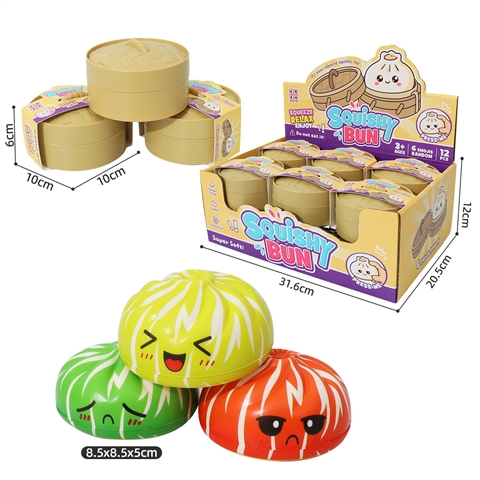
For US, EU and other import buyers sourcing through a factory or trading supplier, choose a squishy dumpling toy supplier whose quoted SKU stays linked to the sampled squeeze response, assortment and carton contents. Start with compression and return to shape: a food-shaped toy must deliver the tactile experience your party, carnival or value-channel assortment needs. Advance the PU-foam bun to tactile sampling; assess the vegetable squeeze toy separately rather than accepting it as an equivalent substitute.
SKU traceability means being able to connect the product identity and revision to its sample, quote, assortment specification, packing and shipment records. Judge factories and trading suppliers by that connection and their demonstrated QC controls—not by business type alone.
Which bulk-pack products should advance to sampling?
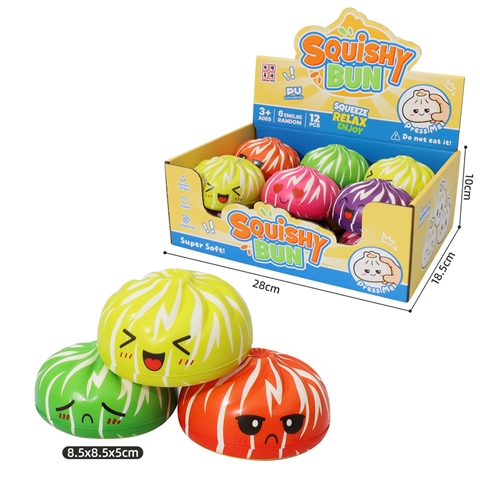
| Zebra-Stripe Bun Squishy with Steamer Display Box — CPS350801 | Recorded material: PU foam. Packing: display box. Reference MOQ: 864 units. Recorded carton quantity: 288 units. Screening decision: request multiple samples and an itemized quote for the bun-and-steamer presentation; approve squeeze resistance and recovery through handling. |
|---|---|
| Vegetable Squeezing Toy — CPS349724 | Recorded material: ABS. Packing: display box. Reference MOQ: 1,152 units. Recorded carton quantity: 576 units. Screening decision: request a mechanism demonstration, component material declaration and multiple samples before considering it for an adjacent food-themed assortment. |
What does each product record tell you about squeeze feel and assortment fit?
The bun is the closer candidate for a dumpling-style presentation, but neither product record establishes squeeze feel, recovery speed or the exact assortment inside a carton.
For the PU-foam bun, evaluate resistance under compression, return to shape and surface condition after repeated handling. Do not specify “slow-rise” merely because the catalog lists PU foam; select the response you actually want and approve it against samples.
For the vegetable toy, ask the supplier to identify what compresses, what produces the squeeze action and which component the ABS declaration describes. ABS in a material field does not establish that the entire toy is rigid, nor does the product name establish its internal construction.
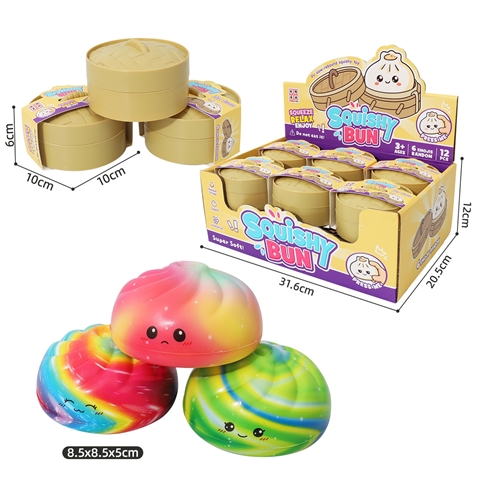
A party-bag buyer should check the complete giveaway unit and how it will be identified after removal from the display box. A carnival buyer should examine handling and presentation in the prize assortment. A value-channel buyer should approve the display contents and refill specification. For all three, a mixed carton needs a written design-and-color breakdown—not just a photograph showing several variants.
Treat the recorded MOQs as reference minimums and the carton quantities as packing information. Confirm both in the current quote. A carton count alone does not establish a full-carton ordering restriction or an order multiple.
What supplier responses should pass the SKU traceability screen?
| Product identity and construction | Request: identify the quoted bun or vegetable toy by supplier item code, buyer cross-reference, revision, photographs and component material declaration. Acceptable response: a consistent identity across the quote, sample label and specification, with differences explained. Decision: advance a matched item; hold an unexplained construction or identity mismatch. Why it helps: similar food-shaped toys should not be treated as interchangeable. |
|---|---|
| Assortment and packing | Request: list designs and colors, quantities of each, display-box contents and units per export carton. Acceptable response: a dated packing specification tied to the quoted item, stating whether the mix is fixed or variable. Decision: accept a fixed mix for a fixed assortment brief; allow a variable mix only within written buyer-approved limits. Why it helps: the buyer can evaluate usable giveaway quantities and display composition. |
| Current quote and cost basis | Request: quote the exact approved configuration with currency, price basis, MOQ, any order multiple, packing charges and shipping terms. Acceptable response: the supplier defines whether the priced unit is a toy, retail pack or display, and confirms the corresponding contents. Decision: compare costs only on an equivalent unit and scope. Why it helps: a display-box price and a per-toy price are not interchangeable. |
| Destination market and intended age | Request: state the intended destination and age group, then request the proposed labeling and item-specific supporting documents for review. Acceptable response: the documents identify the relevant construction or include a clear explanation of the model relationship. Decision: route the package to the buyer's compliance reviewer before order release. Why it helps: catalog identity and tactile acceptance do not establish destination-market suitability. |
| Replenishment and change control | Request: explain how a repeat order retains the bun's response, the vegetable toy's action, the approved mix and the packing revision. Acceptable response: the supplier references the retained sample, identifies shipment lots and agrees to submit proposed substitutions or changes for approval. Decision: advance a repeatable specification; hold an offer that permits unapproved substitutions. Why it helps: replenishment can be checked against a defined baseline. |
| QC responsibility and shipment evidence | Request: identify who checks the order, what is checked against the approved sample and how findings relate to the shipment lot. Acceptable response: an item-linked inspection record covering the agreed tactile, finish, assortment and packing criteria, with defect disposition. Decision: accept an accountable inspection process regardless of whether the seller is a factory or trading company. Why it helps: the buyer can distinguish a promotional sample from the goods being released. |
| Communication and issue closure | Request: return answers against each item, identify the responsible contact and propose dates for unresolved actions. Acceptable response: clear answers, revision references and documented closure of corrections. Decision: record lateness as a communication concern and agree a workable response expectation; do not treat a slow reply as proof of fraud or future QC failure. Why it helps: the buyer can assess whether the supplier's working process fits the buying schedule. |
How should multiple samples be scored before approval?
Score multiple pieces from each proposed assortment against an agreed tactile target, rather than approving a supplier from one attractive sample.
Before handling, record the item identity, sample revision, color or design, dimensions, declared materials, packing and receipt date. The published sample protocol recommends these identification steps and warns that one good sample does not prove batch consistency. Keep observations piece-specific so variation remains visible. Squishy Sample Scorecard
Use the same hand position and approximately the same compression when comparing pieces. For the bun, record resistance, recovery time and residual deformation. For the vegetable toy, first establish the intended action, then compare activation, resistance and return to its starting state. Do not apply a foam-recovery target to a different mechanism.
Agree the handling sequence before comparing suppliers and record it with the results. Any cycle count, timing range or cosmetic tolerance you choose is a proposed purchasing criterion—not a safety standard or a predictor of returns.
Which sample observations belong on the approval worksheet?
| Squeeze feel | Target: the buyer-approved resistance and tactile response for the bun or vegetable mechanism. Observation: record softness, resistance, activation and differences between sampled pieces. Decision: pass only against the agreed product-specific target. |
|---|---|
| Recovery or mechanism reset | Target: the agreed return behavior after the recorded handling sequence. Observation: record recovery time where relevant, residual shape change, sticking or altered response. Decision: hold unexplained variation; reject behavior outside the accepted specification. |
| Surface finish | Target: the approved appearance and finish limits. Observation: photograph seams, print alignment, surface marks, dust attraction and any finish change after handling. Decision: evaluate against the agreed cosmetic criteria, not the supplier's best photograph. |
| Odor | Target: the buyer's agreed sensory acceptance criteria. Observation: describe odor consistently and record any unusual result for investigation. Decision: hold an unusual result for review; an odor observation does not identify chemical content or establish safety. |
| Construction | Target: the approved assembly and declared components. Observation: record visible weak points, closures, attachments, loose parts or changes during handling. Decision: stop commercial approval of the affected construction until the concern is resolved and reviewed as appropriate. |
| Packing and assortment | Target: the agreed display contents, mix and protection of shape and finish. Observation: count sampled contents, photograph packing and record deformation or scuffing on arrival. Decision: approve only the packing and mix actually evaluated. |
What must the approval and handoff record contain?
The handoff record must identify the exact sample revision, show targets beside observations, state the decision and conditions, and name the approver and closure responsibilities.
Attach photographs, criterion-level scores and the defect list, then retain and identify the approved reference sample. This follows the sample protocol's documentation recommendation. The reference supports later comparison; it does not by itself reveal or prevent an undisclosed production change. Squishy Sample Scorecard
What is the catalog-screening decision for these two products?
| Bun candidate — CPS350801 | Catalog-screening decision: advance to multi-piece sampling and an itemized quote. Intended role: dumpling-style food-themed squishy presentation. Approval conditions: agreed squeeze response, recovery, finish, steamer/display contents, carton specification and destination review. |
|---|---|
| Vegetable candidate — CPS349724 | Catalog-screening decision: advance to mechanism demonstration, multi-piece sampling and an itemized quote as a separate food-themed squeeze option. Approval conditions: component material clarification, accepted action and return behavior, finish, display contents, carton specification and destination review. Do not approve it as a bun substitute without a separate buyer decision. |
| Identity and revision | For each evaluation, enter the supplier identity and item cross-reference, buyer item reference, specification revision, quote revision, sample reference and sample receipt date. Keep each variant linked to the relevant photographs and results. |
| Target versus observation | Enter the agreed target and each sampled piece's actual result beside it. Attach the handling sequence, scores, photographs, packing counts and defect list; do not replace observations with an overall impression. |
| Decision and accountable approval | Record approve, conditional approval or reject, together with the permitted stage: sampling, commercial negotiation or order release. Enter the responsible buyer/QC approver's name, decision date and destination-review signoff where required. |
| Conditions and follow-up closure | Give every correction an owner and due date. Close it with the revised record, replacement sample or other agreed evidence, plus the closure reviewer's name and date. Reopen affected approval criteria when construction, assortment or packing changes. |
| Frozen reference and shipment link | Identify the retained approved sample and storage location. Carry its reference and specification revision onto the purchase specification and inspection request, then connect the received shipment's lot and carton records to that order. |
Continue the sourcing review
Turn this guide into a quote-ready shortlist. Start with the squishy toys wholesale category, then compare two published SKUs before asking for current freight and document scope.
- Five-Color Steamer Baozi Squishy (SKU sqz350815)MOQ: 5 cartons / 720 pcs; packaging: Display Box.
- 8.5 cm Colorful Bead-Filled Baozi Squishy (SKU sqz350809)MOQ: 5 cartons / 720 pcs; packaging: Display Box.
For logo, color or retail-packaging work, review the custom squishy toys OEM and ODM program or send the selected items through the wholesale quote workspace.